ALBAWABA- Russian Foreign Minister Sergey Lavrov said on March 5, 2026, that Moscow would take “all necessary measures” to make further U.S.-Israeli military operations against Iran “impossible,” signaling a stronger Russian diplomatic and strategic push to block escalation in the Middle East.
Speaking at a press conference, Lavrov condemned the recent strikes on Iran as “premeditated and unprovoked,” warning they risk destabilizing the region and could accelerate nuclear proliferation in both Iran and neighboring Arab states. He said Russia would intensify efforts through the United Nations Security Council and other international platforms to halt the conflict and restore political dialogue.
Lavrov’s remarks came as Iran reaffirmed its rejection of negotiations with Washington. In an interview with NBC News, Iranian Foreign Minister Abbas Araghchi said Tehran continues to receive support from Russia and China during the crisis and criticized the United States for launching military strikes while nuclear talks were underway in Geneva.
“I don’t know why the U.S. administration insists on starting a negotiation and then, in the middle of the negotiation, attacking the other party,” Araghchi said. He also dismissed calls for a ceasefire, saying Iran was prepared to confront any potential U.S. ground operation. “We are waiting for them… We are confident that we can confront them, and that would be a big disaster for them,” he added.
Meanwhile, U.S. President Donald Trump vowed to continue the military campaign and indicated Washington intends to influence Iran’s political future. In interviews with Reuters and Axios, Trump said Mojtaba Khamenei, the son of the late Iranian supreme leader, would be an “unacceptable” successor, describing him as a “lightweight” and insisting Iran needs leadership that promotes “harmony and peace.”
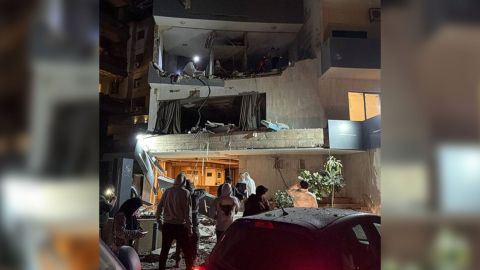
The sharp exchanges follow the February 28 joint U.S.-Israeli airstrikes that assassinated Iran’s Supreme Leader Ali Khamenei and dozens of senior officials in attacks targeting Tehran’s nuclear and military infrastructure.
Iran has since launched retaliatory strikes against Gulf energy facilities, U.S. installations, and Israeli targets, with the widening confrontation reportedly causing more than 800 deaths and pushing global oil prices above $90 per barrel.
The crisis has also triggered broader regional spillover, including Israeli incursions into Lebanon, a U.S. submarine sinking an Iranian naval vessel in the Indian Ocean, and NATO intercepting an Iranian missile over Turkey.