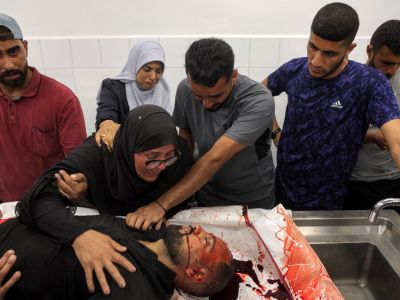


ALBAWABA- Israeli airstrikes on Gaza killed at least three Palestinians and wounded around 15 others on Wednesday evening, according to Palestinian health officials and hospital sources, as Israeli military operations continued across the enclave amid rising tensions in the occupied West Bank.

The strikes reportedly targeted areas in Gaza City and Khan Younis, with Palestinian sources saying that some attacks hit civilian locations, including gatherings and displacement sites. Israel said its operations were aimed at targeting armed groups and preventing security threats, while Palestinian officials accused Israeli forces of continuing attacks on civilian areas despite efforts to maintain a fragile ceasefire framework.
The latest casualties are part of a continuing pattern of Israeli airstrikes, drone attacks, and military operations in Gaza. Recent incidents have reportedly involved strikes on mosques, tents housing displaced families, markets, and refugee camps, including areas in Nuseirat, resulting in additional civilian deaths and injuries.
Israeli military leadership has maintained that operations across multiple fronts remain ongoing. IDF Chief of Staff Lt. Gen. Eyal Zamir said the fighting has not ended and that the military remains prepared for a wide range of scenarios involving Gaza, Lebanon, Iran-related fronts, the West Bank, and Syria. He described the current period as an interim phase in which tensions across the region could escalate rapidly.
At the same time, Israeli officials are reportedly considering expanding military operations in the occupied West Bank. Israeli media reported that Prime Minister Benjamin Netanyahu has instructed security officials to prepare plans for a possible large-scale operation targeting refugee camps, building on previous campaigns in areas such as Jenin, Tulkarm, and Nur Shams that involved raids, demolitions, and widespread displacement.
Israeli authorities have argued that intensified operations are necessary to counter armed groups and prevent attacks, while Palestinian officials and human rights organizations have warned that such measures have resulted in civilian harm, mass displacement, and worsening humanitarian conditions.
The security situation in the West Bank has also deteriorated due to a rise in settler violence. Palestinian communities have reported attacks involving arson, property destruction, and assaults on villages near Nablus, including Qusra, Beit Furik, and Far’ata.
Reports have documented the burning of homes, vehicles, farmland, and religious sites, with Palestinian officials and rights groups accusing Israeli authorities of failing to prevent such attacks. Israeli officials have said that arrests and security operations have been carried out against perpetrators, but tensions have continued to escalate.
The latest developments coincided with Israeli Prime Minister Benjamin Netanyahu’s meeting with U.S. President Donald Trump in Washington, where the two leaders discussed the Iran conflict, regional security, and continued military cooperation.
The meeting, reportedly lasting around 90 minutes, was their first face-to-face encounter since the escalation with Iran began earlier this year. Both sides described the talks as productive, with discussions reportedly focusing on Iran’s nuclear program and broader regional threats.