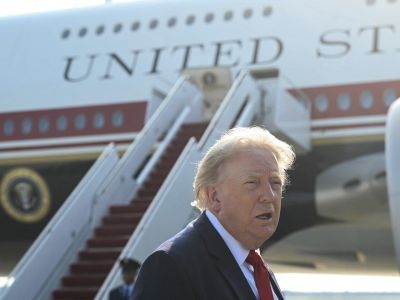
Erdogan feels as much at home in Africa as he does in Ankara, Istanbul or up the Bosphorus. He visited the continent 38 times, travelling to 28 countries over the past 19 years of the Justice and Development (AK) Party rule.
Recep Tayyip Erdogan is a debonair politician who knows were to look for to make his country great. The African option has been in the pipeline for a long-time. His relations with African states wasn't built overnight but took years and even decades to nurture and make grow.
“Western countries have failed to manage the pandemic in accordance with rights and equity.” President Erdogan criticises the west for ‘leaving African communities alone’ in their fight against Covid-19 during remarks at the Turkey-Africa Economy and Business Forum in Istanbul pic.twitter.com/bj1Ceap7gB
— TRT World (@trtworld) October 22, 2021
In 2003 Turkey had just 12 embassies in Africa. After 2009 all this changed with diplomatic missions opening across the continent. Today, Turkey has 43 embassies with the latest being opened in Togo when Erdogan visited the country just last week as part of his African trip that took him as well to Angola and Nigeria. Next year, Turkey aims to open its 44th embassy in Guinea-Bissau.
The first Turkish Embassy to be opened in Africa was in Lagos in 1962 and relations between Turkey and Nigeria continued to be strong, politically, economically and culturally. Today, the extent of Turkish representation continues to be vast from the north in Egypt and Algeria, to Sudan, Ethiopia, Somalia to west Africa in places line Chad, Mali, Niger, Burkina Faso, Senegal, and then to Angola, South Africa, Congo and more.
The list is vast and continues to grow and it shows the premium Turkey and Erdogan is putting on Africa relations with many experts seeing the continent as thriving in the 2nd half of the 21st century. So Africa is a fertile land with much potential for development.
The economic links, trade, the 'soft power', health and cultural institutions that are being forged are remarkable with power politics and international relations must be back in the mind of Turkish politicians like Erdogan. In 2003, the total trade volume between Turkey and Africa stood at $5.4 billion; and in 2020 it jumped to $25.3 billion with an eye for more growth.
Turkish President Recep Tayyip Erdogan has paid official visits to 30 out of the 54 countries in Africa, with his latest tour on Oct. 17-20 comprising of Angola, Togo, and Nigeria. pic.twitter.com/SI1gUi82ET
— Kenan Toprak (@kenantoprak63) October 24, 2021
At the Turkey-Africa Economic and Business Forum held on 22 October and which Erdogan opened just days after his return from his trip to the continent, and inaugurated with 3000 businessmen and 30 African ministers, he said Ankara aims to increase the trade volume to $50 billion and the skies the limit.
Thus Turkey means to increase its trade-exchange to new heights. Her trade is multidimensional starting from investment, large infrastructure projects to military cooperation, defence procurement, logistics, and technology transfer. The unmanned combined aerial vehicles (UCAVs) are the most popular and plenty of demand for. They are effective and powerful and costs a fraction of the price of big jets. And Turkey sells them all over the world and has used them in Syria, Libya and Azerbaijan and African states Ethiopia in its fight with the so-called Tigray Liberation Front.
On day that European Union shuts its door on Turkey, Recep Tayyip Erdogan is in W. Africa talking of Turko-African partnership.
— Amir Taheri (@AmirTaheri4) October 21, 2021
But if thinking of reviving Ottoman Empire he should be in N. Africa.
Problem is N. Aficans don't want him because of his destructive role in Libya.
Africa is a big market for Turkey that is yet to grow and explore with many Turkish companies coming to the area to build. Its current trade volume is minor compared to China which sees Africa as a huge market and an investment opportunity with hundreds of billions of dollars already invested in the different states of the continent. Still Turkish companies have invested around $6 billion in sub-Saharan Africa including around $2 billion in Ethiopia alone.
However, Turkey is still an upstart but an upward moving one. Some of its products include exports from food and manufactured products to textiles, clothes, white goods such as refrigerators and washing machines; these are reputed to be of better quality than those delivered by Beijing. And these products are cheaper than those from western countries. Maybe the equilibrium is still tilted but the market is open for those who can compete most.
Erdogan's frequent trips to the continent - the highest than any world leader from the west and the east - if these terms can still be used in today's globalised world - has increased familiarity and shortened the distance. And on that level, Turkish Airlines boasts of increasing its flights to 60 destinations and capitals in Africa from Istanbul.
Despite talk of a Turkish “Africa strategy,” much of the early enthusiasm over Ankara's engagement with the continent in the mid-2000s has since fizzled out, WPR's @Illustrious_Cee writes. https://t.co/SCfq308r9D
— World Politics Review (@WPReview) October 25, 2021
Despite its long Ottoman rule over the Arab world, Turkey comes to Africa with no "ideological-colonial baggage" unlike the rest of the western powers despite that fact it likes to refer to itself as an "Afro-Euroasian state" projecting itself as lying between three continents with the Mediterranean Sea in between.
The rivalry with China is embedded, after all in the end, it is left to the best man to win. Turkey talks to Africa and its African leaders, Erdogan talks continually of a "win win" situation based on mutual growth. However, Turkey's foothold in the continent is a rivalry becoming apparent in Europe, especially in France which regards, mostly West Africa as its domain and part of its sphere of influence.
Maybe its a personality trait between the two leaders but President Emmanuel Macron has always felt unease with Erdogan, openly accusing Turkey of fuelling anti-French sentiments in this part of the world with the colonial legacy coming up time and again. And therefore, if Macron wants to keep his influence in these nations he has to do a lot more there.
On that point its being argued that one of the main reasons why Turkey and Erdogan were able to enter Africa is because the former colonial powers left newly-independent nations from the 1960s onward to fend for themselves. And thus, it was a great opportunity not only for Turkey which came in late, but for Israel which sought to enter the continent and of course China, and to some extent Russia, after the demise of the Soviet Union in the early 1990s.
Regardless and in spite of what many are saying about Erdogan and his domestic ills, Turkey is set to stay in Africa. The Turkish military base in Somalia is a case in point. Erdogan made frequent trips there at a time when no western leader would visit the place because of security reasons and the rising the Al Shabab which is a Qaeda-affiliate movement. Its base is surely a link to Turkey's top partner in Africa which is Ethiopia where Ankara is the second biggest investor there.
? [A WEEK IN THE WORLD] Cartooning for Peace is tonight at 7:10pm in @DebatF24 to present cartoons on the relations between the EU and Poland, #Erdogan's tour in Africa, the #SakharovPrize and #ColinPowell's death ✏ @Royaards (The Netherlands) & @DamienGlez (Burkina Faso) pic.twitter.com/Z46VK4WGIw
— Cartooning for Peace (@CartooningPeace) October 22, 2021
Besides, Turkey sought soft-power politics in Africa, building mega sports complexes in Senegal and Rwanda, a national mosque in Ghana, a large mosque in Djibouti and an international airport in Niger. It has built 17 schools in Nigeria with its television soap operas becoming very popular in East Africa.
This is just the tip of the iceberg for the main trading partners to Turkey is primarily the Middle East countries and Europe so it can be imagined the large economic exchange and development lies ahead for the two emerging partners.