ALBAWABA- Russia announced on Wednesday that it is “no longer bound” by the New START treaty, the last remaining agreement limiting strategic nuclear arsenals with the United States, just ahead of its expiration tomorrow.
The Russian Foreign Ministry stated that both parties are released from obligations, effectively ending mutual commitments under the pact.
China responded by reiterating that future nuclear negotiations should exclude Beijing, citing its comparatively smaller arsenal of roughly 500 warheads versus thousands held by the US and Russia. Chinese Foreign Ministry spokesman Lin Jian called trilateral talks “neither fair nor reasonable” and urged Washington to engage with Russia’s earlier proposal for post-expiration limits.
Signed in 2010 and entering force in 2011, the New START treaty capped deployed strategic warheads at 1,550 and delivery vehicles at 700 for each side. Extended until 2026, the pact facilitated inspections and data exchanges until Russia suspended participation in 2023 amid the Ukraine conflict, though both countries initially pledged to respect the limits.
That's it. For the first time since 1972, Russia (the former USSR) and the US have no treaty limiting strategic nuclear forces. SALT 1, SALT 2, START I, START II, SORT, New START – all in the past. pic.twitter.com/D3TBZM9ffC
— Dmitry Medvedev (@MedvedevRussiaE) February 4, 2026
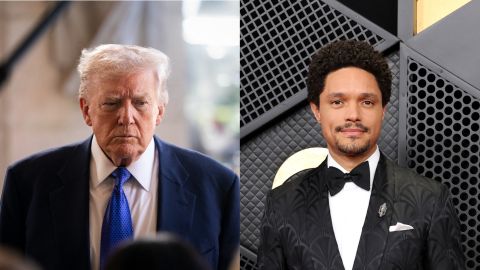
Russian President Vladimir Putin offered a one-year extension in September 2025, but US President Donald Trump, while supportive in principle, has not pursued formal talks, insisting on China’s inclusion in any new agreement.
The treaty’s collapse marks the first time since 1972 that the world’s largest nuclear powers have no binding limits, raising fears of an unconstrained arms race.
Experts warn of increased global instability, reduced transparency, and accelerated stockpile expansion, particularly as China grows its nuclear forces. Former President Barack Obama criticized the lapse in a February 2 post on X, stating it would “pointlessly wipe out decades of diplomacy” and ignite “another arms race that makes the world less safe.” US Secretary of State Marco Rubio stressed that any future pact must account for China’s rising arsenal.