


The war shattering Syria for more than six years has driven millions of families away. On the Jordanian side of the border, a generation of Syrian children has never seen its home. In Irbid, Médecins Sans Frontières runs a maternity hospital where 10,000 babies, mostly Syrians, were born over the past four years.
More than six years of war in Syria have forced more than 5 million people to find refuge abroad. Jordan itself now hosts 660,550 registered refugees, more than a million according to the local authorities. Approximately 80,000 live in the Za’atari camp and 53,700 in Azrak camp—the two biggest camps in the country — while the rest are struggling to settle in urban communities, or felt compelled to move to informal rural environments.
In the Northern governorate of Irbid, 140,000 Syrians live in host communities, trying to find some stability. Many of them have been in Irbid and adjacent areas for 5 or more years—some before the war started escalating. During these years, many Syrian babies have been born, far from their homes and no less than 10,000 at the MSF maternity hospital in Irbid city alone, 35km from the Syrian border.
Born a refugee
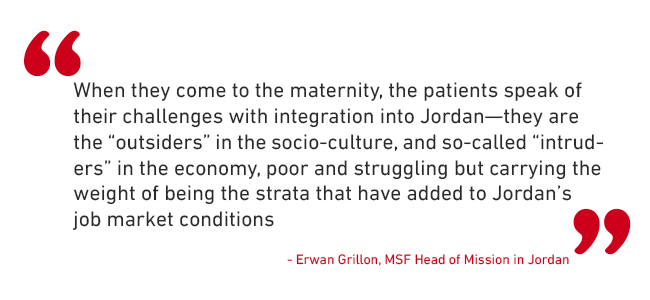
With this free-of-charge facility, MSF has become the main reproductive health actor in North Jordan. “This has placed us in a unique position to witness the hopes brought by new lives as well as the potential threat it represents for babies who may never see their country of origin,” explains Erwan Grillon, MSF Head of Mission in Jordan. Behind the innocence of a newborn, there will be a quest for identity in a country where Syrian refugees represent a heavy burden according to the Jordanian authorities. Stress on the local economy, unemployment, overloaded health system, terrorist threat are some of the issues raised by a tired Jordanian community.
To date, the Government of Jordan has graced more than 50,000 work permits to Syrian refugees, but the struggle is still steep owing to the harrowing conditions across the border.
Within its facility, MSF welcomes every day dozens of families who come for ante and post-natal care, deliveries, as well as mental health support. Families who come to the MSF maternity facility are unable to pay the price of a private clinic, an average 25-40 JOD per visit, as they are often unemployed, in debt and rely on limited humanitarian aid. Basma*, a 20-year old new mother also spoke of a difficult situation surrounding her pregnancy to birth.
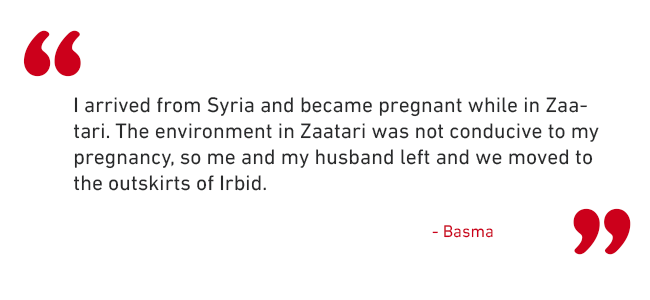
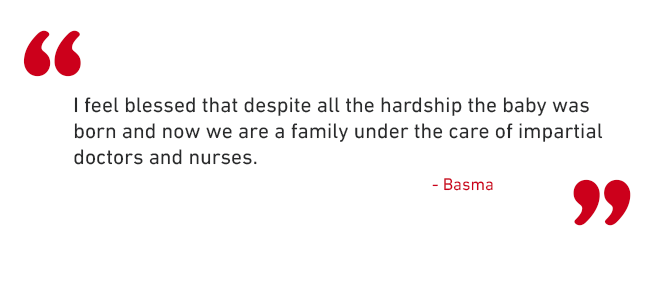
She spoke further about their struggle to find jobs, and the bigger struggle to get tests, medicines and consultations. Upon hearing about MSF from her neighbour, also a Syrian refugee, she decided to go through the maternity unit to give birth to her own baby.
“I came from Syria to Jordan just when the war was starting,’’ spoke Ayesha*, “We were using up all our savings to go to doctors in Amman when I was trying to have a baby, to seek our options but it seemed hopeless.”
Ayesha detailed how four years had already passed and they were running out of savings but we still unable to have a baby. “So we arrived in Irbid to try our luck with IVF here, and I got pregnant. But we were running short of money, and it’s very hard for us to find work in Jordan. How could we go through this pregnancy safe?“
“Then we learnt about the free Mother and Child Hospital run by MSF. We felt that finally we could get the opportunity to be hopeful again,” she said.
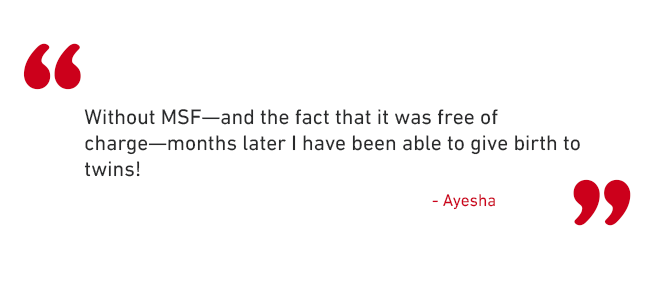
Ayesha and Basma’s case illustrates the need for neutral and impartial maternal healthcare for a population that is already extremely vulnerable, and has numerous issues accessing healthcare. “I have been through hardship to come through Syria and then to safely get through a pregnancy that was already difficult. The worst could have happened without access to healthcare during the pregnancy,” added Ayesha.
What the future holds
Maysoon Mohammad Khalaf Al-Hijazat is the MSF Head Nurse and Midwife in Irbid. Over the years, she has witnessed hundreds of difficult situations. “There was this one patient I will never forget. She was pregnant when she came. She had walked through bombs in the war in Syria and lost both her legs. It was an agony to see her but we kept our composure as if she was just another patient coming here for ante-natal care. Her condition made it difficult for her to give birth and her baby couldn’t survive”.
Perhaps all the cases that come to the maternity facility are not as extreme and tragic, but they reveal the harsh reality of the Syrian refugees in Jordan, the difficulties to build an identity far from home, and the questions they ask themselves every day. Will they stay in Jordan? Will they be able to go back to Syria? To find what? And what will be the future of their children? Will they be refugees for life? Through her joy, Ayesha too voiced her concerns about her twins, “They were born with uncertainty. And the only thing I can be sure of for them is that they have a long and difficult road ahead,” she described morosely. “Perhaps they will not see Syria for years— perhaps never. We will probably struggle further in a different country, but they have been born here. And perhaps they will join the other Syrian kids who go to school at a different time than the Jordanian kids to avoid head-on conflict.”
* Names have been changed in order to protect the woman's identity
This article was contributed by Médecins Sans Frontières and has been edited from its original.


