ALBAWABA- Iranian Foreign Minister Abbas Araghchi has defended recent strikes carried out by the Islamic Revolutionary Guard Corps (IRGC) against targets in Kuwait and Bahrain, describing the operations as legitimate acts of self-defense against U.S.-linked military facilities in the Gulf.
In a statement posted on the X, Araghchi said the strikes targeted locations that are being used by the United States to conduct operations against civilian shipping and undermine a fragile regional ceasefire.
"Our Armed Forces are conducting self-defense strikes on sites the U.S. is permitted to use to attack civilian shipping and violate the ceasefire," Araghchi wrote. "Any hostile act will be met with an immediate, decisive response. What sanctions and war failed to achieve won't be won with more war."
Araghchi's remarks come amid growing tensions in the Persian Gulf following the apparent collapse of a U.S.-brokered ceasefire aimed at reducing hostilities between Washington and Tehran. Iran has accused the United States of using military facilities in Gulf countries to support operations against Iranian commercial vessels and maritime traffic. Tehran has repeatedly warned that states hosting U.S. military assets could become parties to any future confrontation if those facilities are used in actions against Iran.
As part of its diplomatic messaging, Iran circulated a video featuring U.S. Secretary of State Marco Rubio discussing intelligence and security cooperation with regional partners, including Kuwait, Bahrain, and the United Arab Emirates. Tehran argues that such cooperation links these facilities to U.S. military activities and therefore makes them legitimate military targets under its interpretation of international engagement rules.
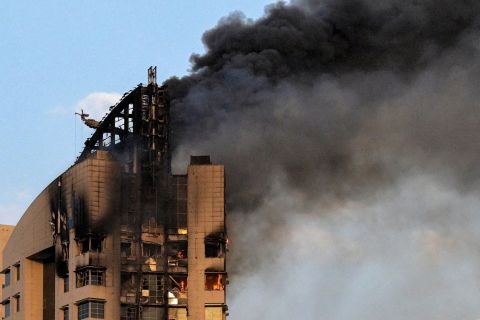
According to regional defense officials, the IRGC reportedly employed a combination of Shahed-136 drones and Fateh-110 ballistic missiles in coordinated attacks targeting areas near Ali Al Salem Air Base in Kuwait and naval infrastructure close to Isa Air Base in Bahrain.
Preliminary reports indicate limited structural damage to logistics and support facilities. Air defense systems, including U.S.-operated Patriot missile batteries, reportedly intercepted a significant number of incoming projectiles. No military fatalities have been officially confirmed.
Kuwait and Bahrain condemned the strikes, describing them as violations of their sovereignty and territorial integrity. Both countries have called for an emergency meeting of the Gulf Cooperation Council (GCC) to address the security situation.
Meanwhile, the U.S. Central Command (CENTCOM) has reportedly elevated its regional threat posture and deployed additional naval assets to safeguard maritime trade routes and deter further attacks as tensions continue to rise across the Gulf.