


Eleanor Beevor
American-Iranian relations have taken a sharp turn for the worse since the Trump administration was voted in. Faith is fast fading in the viability of the Obama-era Iran nuclear deal, the Joint Comprehensive Plan of Action (JCPOA).
Mike Pence recently proclaimed that American would no longer be certifying the deal. That same day, Iran’s Deputy Foreign Minister Abbas Araghchi told a London audience that Iran’s patience was wearing thin, and they would not be subjected to America’s whims.
At the same time, the fury between Iran and Israel is approaching a cliff-edge, with some dangerously aggressive gestures in the weeks following an Iranian drone entering Israeli airspace. Both countries’ leadership have made unpleasantly clear that they are prepared to respond militarily to further provocations, whilst government figures on both sides speak of war as an inevitability. Now more than ever, we need a consistent policy towards Iran rather than quick-fire reaction. If disaster is to be averted, a new policy towards Iran will need to follow several critical guidelines.
(i) Try to save the JCPOA.
Trump has made inescapably clear that he loathes the deal and what it stands for. However, he must be made to consider what his alternatives are, particularly given his promise to avoid overseas adventures and put “America first”. The JCPOA isn’t perfect, but it is still the strongest barrier to Iranian nuclear weapons that there is. Those who advocate kicking it over are under the impression that restoring the sanctions that the JCPOA lifted will cripple the Iranian economy and force regime change. This is wishful thinking. Even Republican opponents of the original deal such as Paul Ryan have conceded that there is no chance of restoring multilateral sanctions against Iran now that the deal has been brokered.
Europe, to its credit, is ready to stick with the deal, and Iran has so far complied with the terms. Thus Washington could only institute unilateral American sanctions, which are unlikely to have a transformative effect on the Iranian economy. True, the spirit of cooperation that the JCPOA represented is wearing very thin indeed, and Iran has not helped the situation with its ballistic missile launches. Yet the deal is not dead yet. Whilst Deputy Foreign Minister Abbas Araghchi said he thought the significance of the deal was lost if the Americans pulled out, he added: “It is up to the other participants of the JCPOA to show and to convince Iranians that they can deliver JCPOA even without the US.” With any luck it will not come to that, but the opportunity to repair the deal, and possibly even to strengthen its weaknesses, is approaching. Bahar Karimi, a specialist in American-Iranian relations at Kings College London, told Al Bawaba:
“The upcoming trans-Atlantic talk in Berlin this month is the best opportunity for the Europeans to persuade the Americans to uphold the nuclear deal with Iran. A successor deal which will address the issue of ballistic missiles and nuclear fuel production is to be discussed at this meeting, and provides a tolerable solution for the parties involved. An add-on deal will start a dialogue which will not affect the terms of the JCPOA and will therefore result in its preservation.
The lengthy negotiation process will also allow for Donald Trump to tell his support base that he is doing something about the Iran deal which he had promised to do on the campaign trail. At the moment, Europeans are scrambling to save the deal in whichever way possible, under pressure from both the U.S. and Iran, and this meeting seems to be the best option for them at this time.”
(ii) Embrace a multilateral foreign policy, and move beyond security
/AFP
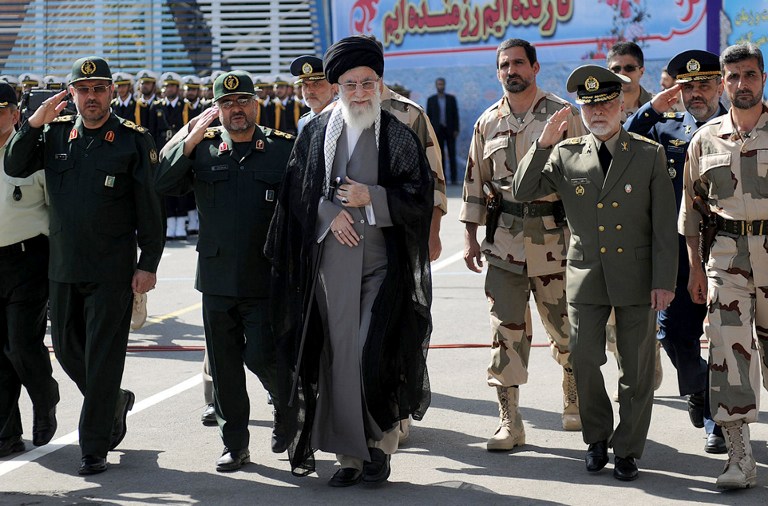
The west must abandon the idea that it will one day wield enough influence over Iran to be able to mould Iranian policy according to its own interests. Iran may be economically weak at present, but it is still a lot stronger than it was in the previous decade, and that is not only because of the JCPOA lifting sanctions. China is pouring money into Iran, given Iran’s indispensable place in the One Belt One Road trading network that China is building, set to be the largest infrastructure building project in history. Unilateral American sanctions are not going to change that.
A better way forward is to embrace the multilateral spirit that the JCPOA epitomised, both within and without the deal. This will be undeniably difficult to do in contentious matters of security, particularly towards Israel. Again, however, if America wishes to protect Israel’s security, it will need all the influence in Tehran it can muster, and it will also need the support of other regional stakeholders. This will necessitate bringing a broader range of Arab interests into American foreign policy-making. So far Saudi Arabia has enjoyed an outsized influence in Trump’s policy, and Riyadh will resist any attempts to temper that and to soften America’s approach to Iran.
However, support for a more moderate approach to Tehran will be found elsewhere. Other members of the Gulf Cooperation Council, such as Oman and Qatar have economic interests in Iran that they want to preserve. These interests must be consistently heard in Washington. Iran’s often provocative foreign policy will not make for an easy atmosphere of cooperation - its ballistic missile usage is case in point. But this does not mean there is no room for cooperation at all. Vahid Abedini, a political scientist at Florida International University, told Al Bawaba:
“Iran has had security problems in the post-revolutionary era, as a result of the Iran-Iraq war and the American interventions in the region, especially in Iraq and Afghanistan. In response, Iran has followed policies that we should see as deterrence policies. If the west wants to win back Iran, it should help by rebuilding the security arrangement in the region in a way that Iran will not feel threatened by its neighbours or western allies.”
The broadest possible nets of regional cooperation need to be forged. And this multilateral approach could begin to be fostered in spheres other than that of security. One pressing place to start is the region’s environmental health. Iran is painfully aware of its water insecurity, and its water sources are shared with a large number of its neighbours. The Ayatollah’s adviser for military affairs highlighted this problem at the end of February, and insisted that Iran wanted to find peaceful solutions to the problem. Here is an opportunity for European and American international development agencies to facilitate cooperation, invest in sustainable technology, and offer innovative solutions to the water shortage.
(iii) Diplomacy first, sanctions second
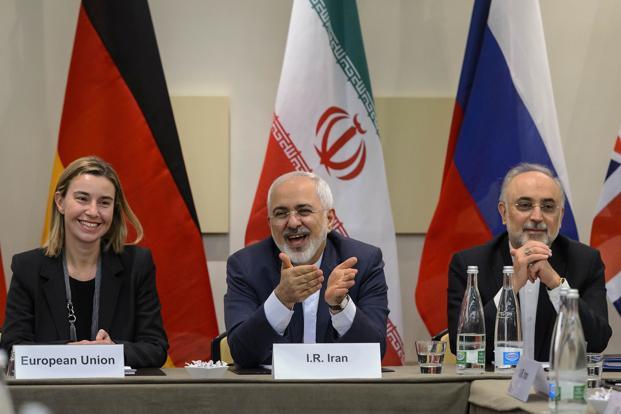
EU foreign policy chief Federica Mogherini, Iranian foreign minister Mohammad Javad Zarif and head of Iran Atomic Energy Organization Ali Akbar Salehi waits for the opening of a plenary session on Iran nuclear talks in Lausanne. /AFP
Richard E. Hunter, the former US Ambassador to NATO, recently wrote that diplomacy is becoming a lost art of foreign policy. This is not only because of cutbacks to the diplomatic service, but America’s habitual use of sanctions. The problem with sanctions in regard to Iran are twofold. Firstly, even when there was a multilateral global effort to sanction Iran, it was still able to move towards becoming a nuclear power. Secondly, it makes for an environment of bad faith, one in which it is all too easy to portray America as the “Great Satan”.
This is not to say diplomacy should be the only tool in countries’ arsenal. Diplomacy is more effective when there are costs for failing to reach an agreement, including sanctions and the use of force. But the diplomatic avenue must be the first port of call, so as to offer a chance to avoid these costly manoeuvres in the first place. This kind of diplomacy is something that Europe and other policy makers that Trump is prepared to listen to must sell.
However much Trump likes sabre rattling, if he is serious about saving American blood and treasure in foreign conflicts, then he will have to take diplomacy seriously. This may be a challenging sell. Trump’s idea of deal-making, born from the business world, is to start with the maximalist demand and retreat as little as possible. But unlike in business, not everything in politics is for sale. There is a role here for veterans of diplomacy to try and make the case for their art form heard on Capitol Hill. If they succeed, they will be doing a service to international relations that goes far beyond Iran.
(iv) Don’t leave the Iranian people behind
AFPOLIVIER LABAN-MATTEI
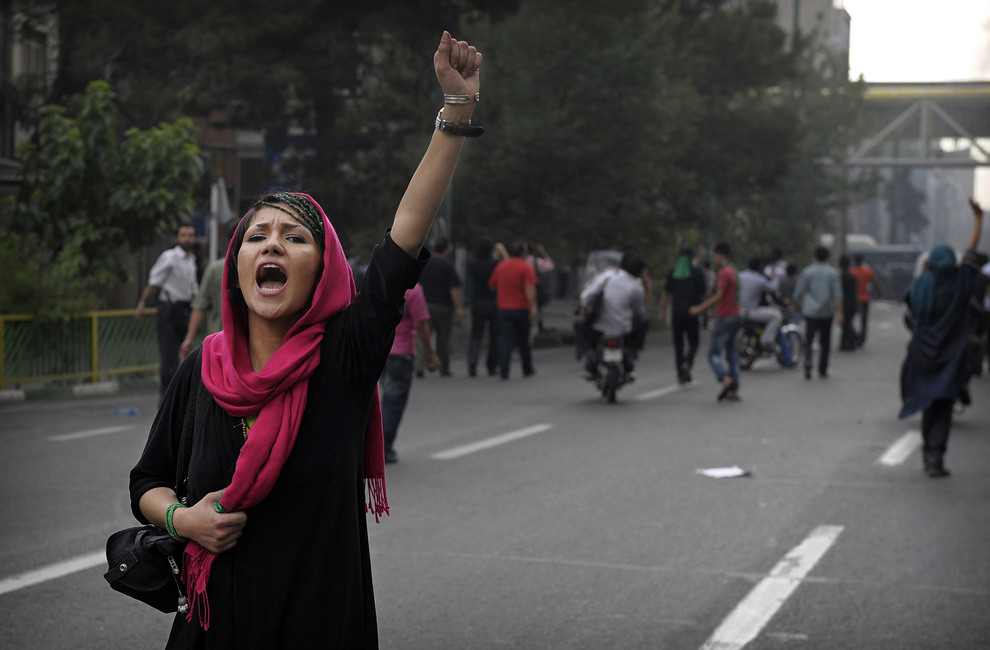
Protests against the current political order reflect a widespread desire for change that we should not overlook, even as a fog of cynicism descends over what popular uprisings in the Middle East can achieve. However, Iranian activism is not a cry for western intervention. Vahid Abedini added:
“It is crucial that western countries respect Iranians’ decisions for their country and their own national interest. Like any other nation-state in the world, Iranians like their independence. If the west wants to win back Iran, it must start by winning Iranian’s trust that it will not intervene.”
It is painfully true that the Iranian government has a grim human rights record, and it is legitimate to question whether cooperating with the existing government is the moral choice. However, the alternative of isolating Tehran is certainly no better for the human rights situation, and would more likely make it worse. Bahar Karimi said:
“Western governments will only be able to have the ability to have effective dialogue with the Iranian government on human rights if they have diplomatic ties. Not only will western governments be able to have a direct dialogue with the Iranians on the issue, Iran will have more to lose if its interests within the international system are at risk, such as economic deals. Western governments should not prioritize economic deals over the issue of human rights. However, they must strive to address the double standards in their own diplomatic behaviour, such as in their relations with Saudi Arabia. Only then will they become a legitimate voice on human rights within the region.”
It is time for the west in general, and America in particular, to ask who benefits from tensions with Iran. Because if relations worsen and the deal is abandoned, there will be costs, to the Middle East, to nuclear security, and to human rights. These costs can still be averted, but a new direction needs to be committed to fast.


