While the recent spike in oil prices is the result of both economic fundamentals and market psychology, the latter factor explains much, if not most, of the rise, according to oil ministers and industry experts participating in a session on energy issues at the World Economic Forum in Jordan.
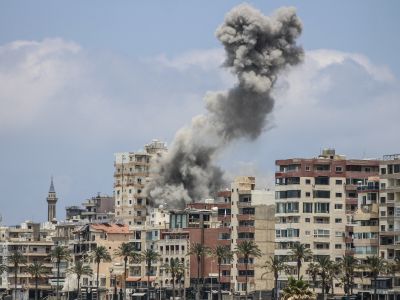
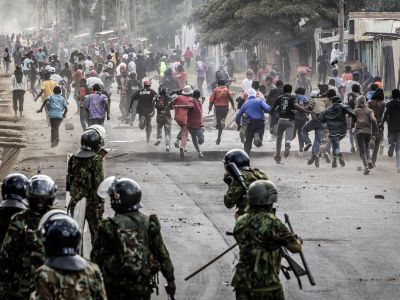
Abdulla bin Hamad Al-Attiyah, Second Deputy Prime Minister and Minister of Energy, Industry, Electricity and Water of Qatar, estimated that the “fear factor”, created by the fighting in Iraq, recent attacks on Western workers in Saudi Arabia and general fears of instability in the Middle East, has added at least US$ 8 to the price of oil, which this week rose above US$ 40 per barrel in hectic trading. “The market is under an enormous amount of psychological pressure,” Al-Attiyah said.
Recent headlines, he noted, have described oil price as setting “record highs,” even though in inflation-adjusted terms they are still considerably below the peaks reached in the early 1980s.
The scope of the recent run-up in oil prices also has been exaggerated by the depreciation of the US dollar against the euro and other major world currencies, Sameh Fahmy, Minister of Petroleum of Egypt, told participants.
Measured in euro terms, oil prices have declined sharply since 2000, he noted. The dollar price gains seen in the past few months have only restored some of those losses.
Al-Attiyah confirmed reports that representatives of the Organization of Petroleum Exporting Countries (OPEC) will discuss recent market developments when they gather later this month in Amsterdam for a meeting of the International Energy Forum, an event that brings together the major oil producing and exporting nations. OPEC members, Al-Attiyah added, may convert these informal talks into an emergency session in order to consider a proposal from Saudi Arabia to increase OPEC production limits by 1.5 million barrels a day. However, a formal decision on that proposal may not be made until OPEC’s scheduled June meeting in Baghdad.
OPEC’s ability to influence market prices is more limited than it was during the oil shocks of the 1970s and early 1980s, Al-Attiyah said, both because the organization now accounts for only 35% of global oil output, and because most OPEC members have only limited ability to boost production, which is already running more than 2 million barrels a day above the official limit of 23.5 million barrels per day. The recent rise in prices, Al-Attiyah noted, has not been accompanied by spot shortages – an indication that the crisis is largely being driven by market sentiment, not a supply and demand imbalance. “It’s always easy to turn OPEC into the scapegoat,” he said. “But we are trying our best to stabilize the market.”
In terms of more fundamental supply and demand factors, much of the uncertainty now roiling global oil markets is being driven by changing perceptions of the prospects for oil production in Iraq, said Augusto Lopez-Claros, Chief Economist and Director, Global Competitiveness Programme, World Economic Forum. At the end of April 2003, following the U.S. invasion of Iraq, futures markets indicated that oil prices would fall to US$ 22 a barrel by the year 2006 – presumably anticipating that Iraq would be able to raise production beyond its pre-war level. “You can’t escape the conclusion that much of the change in market expectations since then has been due to the situation in Iraq,” Lopez-Claros said.
Issam A. R. Al-Chalabi, Chairman, Al-Sanam Petroleum & Economic Consultancy Co., Iraq, and a former Iraqi oil minister, gave a gloomy overview of the outlook for Iraq’s oil industry, which, he said, is in “terrible shape”. In addition to frequent attacks on pipelines, loading terminals and other infrastructure, the country’s oil fields have been ravaged by decades of overproduction and poor maintenance, Al-Chalabi said. As a result, occupation authorities have yet to attain their short-term goal of restoring Iraq’s pre-war production of 2.8 million barrels a day, and will not be able to do so without major restoration work in the country’s existing fields.
Projections that the development of new fields would enable Iraq to quickly expand production beyond its pre-war levels also look increasingly unrealistic, Al-Chalabi added, especially given the uncertain security situation. It is unlikely that other OPEC members will be able to boost production sufficiently to offset the shortfall in expected Iraqi output growth, he added.
Participants were generally more upbeat about the effect of higher oil prices on the global economy. Alan P. Larson, US Undersecretary of State for Economic, Business and Agricultural Affairs, noted that the economic impact of oil prices has been reduced in recent years as energy costs have come to account for a progressively smaller share of US and global output. Nevertheless, recent reports showing an acceleration in inflation in the United States can be traced in part to rising oil prices. Further increases could have a more serious impact, Larson warned.
To the extent the recent spike in oil prices reflects an adjustment to unexpected developments – both on the supply and the demand side of the equation – part of the rise could be reversed as uncertainty is reduced and market expectations normalize, Lopez-Claros said. Futures markets, he said, are still forecasting a decline in oil prices over the next several years, although not as large as was expected at this time last year. “It’s possible to foresee a scenario in which strong global economic growth is combined with a gradual quieting down of volatility in oil prices,” Lopez-Claros explained. (menareport.com)
© 2004 Mena Report (www.menareport.com)