


ALBAWABA- Mark Carney’s Liberal Party has secured a clear parliamentary majority in Canada’s federal election, winning 172 seats in the 338-seat House of Commons and bringing an end to months of political uncertainty.
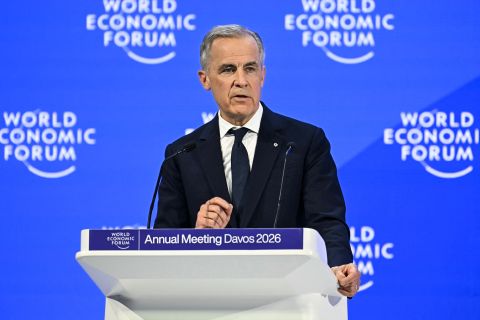
The result gives Carney a strong governing mandate and sets the stage for an ambitious agenda centered on expanding Canada’s strategic autonomy, particularly in relation to the United States.
Carney’s campaign gained momentum through a sharply critical stance toward Washington’s policies on both trade and foreign affairs. He repeatedly accused the US of undermining international norms, warning against what he described as “the erosion of international law” and strongly rejecting former President Donald Trump’s rhetoric suggesting Canada could be absorbed as the “51st state.”
Throughout the campaign, Carney pledged a major overhaul of Canada’s defence and industrial policy, including increased domestic military production using Canadian resources.
He also called for greater independence in foreign policy decision-making, opposing Canadian involvement in US-led military actions, including tensions involving Iran and the naval blockade of the Strait of Hormuz. His position on Middle East conflicts included support for civilians in Gaza and Lebanon and criticism of Israeli military operations in southern Lebanon.
The vote took place against a backdrop of strained US–Canada relations, marked by tariff disputes and political friction that resonated with voters. Carney’s promise to diversify Canada’s trade and security partnerships also gained traction, particularly following his recent outreach to China, which opened discussions on critical minerals, technology, and investment cooperation.
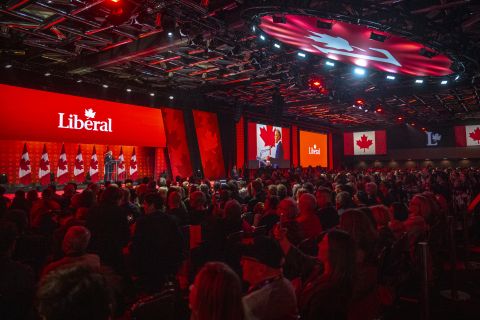
The election outcome reflects growing public appetite in Canada for greater economic and diplomatic independence, alongside concerns over external influence in domestic policy. The Liberal Party performed strongly in urban and suburban districts, where voters identified sovereignty, cost of living, and economic resilience as key issues.
Carney, 61, is a former governor of the Bank of Canada (2008–2013) and the Bank of England (2013–2020). He entered federal politics in 2024 and rose quickly to lead the Liberal Party following Justin Trudeau’s resignation. His technocratic economic background, combined with a forceful sovereignty-driven platform, has reshaped him into a dominant figure in Canadian politics.
With a majority secured, Carney is now positioned to advance significant changes in Canada’s defence posture, trade strategy, and foreign policy direction over the coming parliamentary term.


