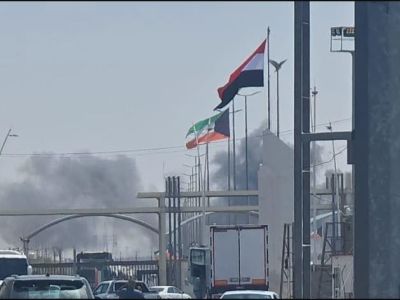
ALBAWABA - Yesterday, Iran bombed Israel in retaliation for Israel bombing Lebanon during the latter’s ceasefire. In response and despite Trump’s pleading, Israel retaliated with its own strikes earlier this morning. Retaliation after retaliation as energy and oil prices soar.
It seems that the markets were too hopeful last week, as prices were somewhat beginning to find footing; that all went out of the window yesterday as rockets were flying to and from Iran and Israel again.

A man poses for a photo next to a fallen rocket half-buried in the ground on the outskirts of Jericho on June 8, 2026, following Iranian and Iran-backed Houthi rebel attacks. (Photo by AHMAD GHARABLI / AFP)
Similarly, as rockets flew so did energy prices and as they fell so did the markets, with oil rising as risk is posed to its supply and stocks falling as tensions and AI bubble fears spread; Asian stock markets hit red today and Korea’s Kospi halted trades briefly.
On Monday morning, Brent was trading 4.23% higher at $97.03 a barrel while US Crude was up 4.13% at $94.32 a barrel, South Korea’s Kospi fell by more than 8%, and Tokyo’s Nikkei was down 3.66% after reaching a record high just a few days ago; Shanghai Composite and Hong Kong's Hang Seng Index fell 1.2% and 1.06% respectively.
On Friday, US stocks fell as traders dumped technology stocks, with the Nasdaq closing at 4.8%, its biggest drop since April of last year while the S&P 500 Index dropped by 2.6%
“US equities and treasuries sold off sharply on Friday after a surprisingly strong May jobs report dented hopes of near-term Fed easing, while oil prices remain volatile driven by headlines around the Iran war and any peace talks,” said Daniel Richards, senior economist at Emirates NBD.
"The figures pointed to a labour market that remains resilient, making further rate cuts this year less likely. Markets now fully price in a 25 basis points hike by year-end; before the release, a full cut was not priced until the March 2027 meeting," he added.