ALBAWABA - Yemen's internationally recognized government has tightened its grip on air travel to and from the United Arab Emirates, a step that has only intensified the already fraught relationship with the Southern Transitional Council (STC). The STC, in turn, grounded all flights at Aden International Airport.
A Yemeni government source, speaking to Al Jazeera, attributed the move to escalating political and military tensions. Reuters, citing a Saudi source, confirmed the restrictions were in place for flights to and from Abu Dhabi and Dubai, characterizing the action as an effort to prevent further deterioration in Yemen.
The STC, according to Reuters, did not accept the government's decision. The council's transport minister immediately ordered the suspension of all flights, both arriving and departing, at Aden airport, effectively bringing civilian air traffic in the southern port city to a standstill.
The STC-affiliated minister issued a statement, taking issue with what he termed "sudden measures" from Saudi Arabia. He claimed he'd been directed by the Saudi-led coalition to have international flights inspected at Jeddah airport. He also noted that the previous operational procedures would remain in place for most routes, save for those connected to the UAE.
The aviation dispute surfaced against a backdrop of escalating political tensions, following a week of swift developments. Rashad al-Alimi, Chairman of Yemen’s Presidential Leadership Council, had demanded the UAE forces' withdrawal from Yemen within a day, and urged the STC to remove its forces from the eastern provinces of Hadramout and Al-Mahrah.
Al-Alimi cautioned against any efforts to erode what he deemed sovereign decisions. He explained that these actions were designed to safeguard civilians and stop armed factions from forcibly reshaping the situation.
During a meeting with his advisers, he stated that these decisions were made on both legal and ethical grounds. They were also coordinated with the Saudi-led coalition to prevent further decline in the eastern regions. He commended local authorities for their work in securing vital state facilities and keeping public services running.
International Appeals and Limited Withdrawals
Al-Alimi had previously warned that unilateral military actions in Hadramout and Al-Mahrah posed a threat to the cohesion of Yemen’s military and security command structures, thereby undermining the state's authority.
He called on the global community to take a strong position, backing Yemen's constitutional processes, and to act through the UN Security Council.
These warnings came after reports of the STC forces' limited pullback. Yemen's state television reported that the National Shield Forces had started moving to various sites in Hadramout after STC units left some areas.
Hadramout Governor Salem al-Khombashi told Al Jazeera that the STC's reaction to government withdrawal requests had been minimal. He urged the council, which supports southern secession, to completely remove its forces from the province to prevent more bloodshed.
Escalation After Coalition Airstrike
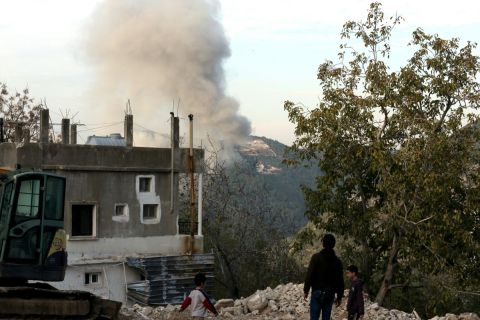
The situation worsened after coalition airstrikes earlier this week targeted weapons and military vehicles that had just arrived at Mukalla's port from the UAE's Fujairah port, delivered by two ships. Mukalla is currently controlled by the STC.
Brigadier General Turki al-Maliki, the coalition's spokesperson, explained that the strike was carried out at the request of Yemen’s Presidential Leadership Council. The goal was to safeguard civilians in Hadramout, given the serious humanitarian violations allegedly committed by armed groups associated with the STC.
In response to the airstrike, al-Alimi announced a nationwide state of emergency, lasting 90 days, and reiterated his call for the complete withdrawal of all UAE forces from Yemeni soil.