By Eleanor Beevor
As one of the oldest democracies in history, Britain has carried many of its formative quirks into the modern world, despite a lot of doubt about whether they belong in it. And none is more controversial than the House of Lords, or House of Peers.
Throughout its history, the House has generally been protected from reform or abolishment by the Conservative party and the broader political right, whilst being reviled by Labour and the politically progressive. But the past few years, and the aftermath of the Brexit vote, has created the House unlikely new supporters, alienated its historical allies, and may end up shifting the very fabric of British politics.
Unelected Lords
As the upper chamber of Parliament, the House of Lords, (often referred to simply as the Lords) has an influential, and sometimes decisive role on passing new legislation. It works with the Members of Parliament who sit in the Lower House, the House of Commons. But unlike the House of Commons, the majority of the Lords’ members are unelected.
The House is composed of church leaders, and Life Peers, who are individuals bestowed with the peerage after being nominated by the government because of their personal achievements. Most members can retain explicit allegiances to political parties, and while most do, there are also a number of independents.
But there are also the hereditary peers. The House was reformed in 1999 in order to limit the number of hereditary peers - those who inherited their places in it because of their aristocratic descent. Still, 92 hereditary peers (out of nearly 800 total members) remain, despite regular calls for the practice to end.
Use-and-Abuse
And their behavior has sometimes made their privileges very hard to defend.
There is a special resentment around the hereditary peers being able to claim a £300 allowance for each vote they attend, given that they come from some of the wealthiest families in the country. Scandals around the use and abuse of this money have both outraged and entertained the public. Though few incidents can top the time when Baron Sewell was covertly filmed taking drugs with sex workers, whilst wearing a bra and boasting that his parliamentary allowance was paying for the evening.
Though the Lords can put forward legislation of their own to be voted on by both houses, their usual role is that of reviewing legislation, or of proposing amendments to it. Both Houses of Parliament need to vote on a bill before it becomes an act, although it is rare for the Lords to block a motion voted on by the Commons. When there is an obvious divide between the two houses, it is usually resolved through the Lords negotiating amendments to the bill, rather than an outright halting of the proposed legislation.
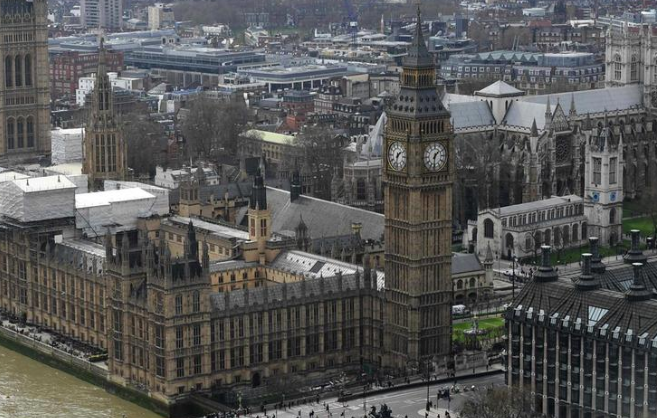
Britain's iconic parliament building. Justin Tallis / AFP
Yet when the Lords do effectively block a bill, it creates political shockwaves. The Conservatives having the largest number of the Lords’ party-affiliated members, although there are significant Labour, Liberal Democrat and independent presences too.
It is the Conservatives that have held majority or coalition governments, and the post of Prime Minister since 2009, and it is also the Conservatives that have most consistently defended the Lords from the further reform that many crave. But despite these apparent points of strength, the Conservatives are increasingly finding themselves challenged by them.
A notable example was when Chancellor of the Exchequer George Osborne tried to push through cuts to tax credits in 2015. Tax credits are financial support for low-income families.
Despite campaign pledges by the Conservatives that tax credits would not be lost in public spending cuts, government eventually moved to slash them, with no meaningful replacement in the immediate term. But in a surprise turn of events, the Lords blocked the move after it was revealed that the cut would leave many poor families over a thousand pounds worse off each year.
Brexiteers
In this, and in other instances where they threw their support behind progressive causes over the last few years, the Lords became unlikely allies for the left and the centre – the political wings normally advocating for the House to be reformed, or even abolished. And after the Brexit vote, the House of Lords has been key in tempering a number of the bills around the withdrawal from the European Union, to the relief of “Remainers”, and to the fury of “Brexiteers”.
On May 1st, the Lords debated a cross-party amendment to the EU Withdrawal Bill, around whether Parliament will get a “meaningful vote” on the final Brexit deal negotiated between Theresa May and the EU. Fearing any last-ditch attempts to reverse the departure from the EU, hard Brexiteers have pushed against a Parliamentary vote on the terms of the final deal.
They have also tried to create the conditions that, if such a vote were to happen, MPs would be reluctant to vote against the deal anyway. To accomplish that, Brexiteers consistently pushed against an agreed-upon “transition” period, in which Britain would continue to adhere to EU law after its official departure from the Union in March 2019, up until all aspects of its future status had been decided.
Rejecting such a transition period, and also rejecting a proposed deal would create a scenario in which Britain had no established legal framework with which to conduct its external affairs after March 2019. This has prompted fears of chaos around its borders. But the amendment proposed and passed by the Lords this week would embolden those seeking such a vote, since it will effectively give MPs the power to block Britain’s departure from the EU without a deal.
It is difficult to overstate the ideological division, and the bitterness, between the two sides of the Brexit divide in Britain today. But every concession to mediating Britain’s departure is seen by “hard” Brexiteers as a potential threat to Brexit as a whole. This is not without cause – hopes for a second referendum, and pushes to stop, or at least neutralize the most significant effects of Brexit, abound among Remainers. But now for perhaps the first time in Britain’s political history, there has been a wave of support for the House of Lords from the left, and calls to abolish it by the right.
Cahoots with Brussels
The right-wing Daily Mail newspaper ran a headline the morning after the vote going “HOUSE OF UNELECTED WRECKERS”, and the article said that the “Remainer elite” was seeking to “fight a guerilla war” against Brexit. It also implied that the Lords were “in cahoots with Brussels”. Arch-Brexiteer Jacob Rees-Mogg, whose father was a hereditary peer, and whose own voting record until now had consistently been against reforming the Lords, has now called them “arrogant” and said “What about democracy?”
Meanwhile, the Labour MP Jess Phillips, normally a vocal critic of the House of Lords, wrote that “…my attitude to those who walk the red carpet of Westminster is softening” given their current stance on softening Brexit. She cheerfully admitted a normally unspoken truth for the British – that support for the Lords depends on whether they are working for or against your politics.
Whether this shift in their support base will hasten the demise of the House of Lords remains to be seen, although it is unlikely to happen in the forseeable future. But the incident certainly goes to show that British politics have gone down the rabbit hole now. No historical allegiances can be counted on any more, and it’s every side for themselves.