

ALBAWABA - The interim leadership council of Iran met on Thursday to talk about how to choose the next Supreme Leader of the country and to react to what U.S. President Donald Trump said about the process.
Iran's official news service says that President Masoud Pezeshkian led the meeting, which was mostly about planning a meeting of the Assembly of Experts, which is in charge of choosing Iran's Supreme Leader. What the group also talked about was Trump's recent comments that the US should have a say in who leads Iran in the future.
At the meeting, officials were very against the idea of outsiders getting involved in Iran's internal matters. They said Trump's words show that he has bad plans toward Iran and emphasized that the Iranian people would not let outside powers get involved in their country's politics.
The Tasnim News Agency in Iran said that Ali Larijani, who is the secretary of the Supreme National Security Council, told the council about the recent developments in the war. Plans to get the Assembly of Experts together to start choosing a new head were also talked about.
The interim leadership council agreed to steps that would make the country's armed forces stronger and promised to continue to support military actions during the meeting. The government was also told to make sure that basic goods and medicines are available while the war lasts.
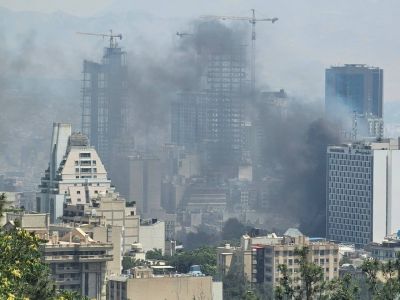
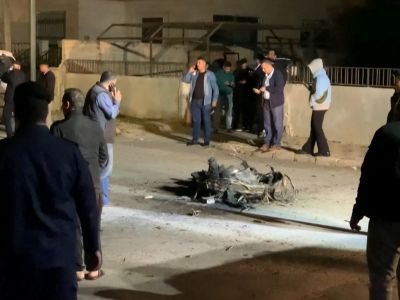
President Masoud Pezeshkian, Chief of the Judiciary Gholam-Hossein Mohseni-Ejei, and cleric Ayatollah Ali Reza Arafi are the people on the council right now. The government did not say when the Assembly of Experts, which is made up of 88 clergy members, will meet to vote on the new Supreme Leader. Israel recently used bombs to damage some buildings that were connected to the assembly.
Amir Saeid Iravani, Iran's representative to the UN, said that Tehran would continue to use what he called its legal right to self-defense against attacks from the US and Israel. He also said that Iran's actions are in line with Article 51 of the UN Charter, which says that nations have the right to protect themselves against aggression.
Since the killing of Supreme Leader Ali Khamenei on February 28 by a joint Israeli-U.S. strike, the interim leadership council has met three times. This event caused a new phase of instability in the area.