

ALBAWABA- US President Donald Trump launched a scathing attack on Iran’s “war propaganda” in a lengthy Truth Social post late Sunday, accusing Tehran of flooding global media with disinformation to undermine the US-Israeli military campaign that began in late February.
In the detailed message, Trump commended ongoing US efforts to censor media outlets amplifying Iranian narratives, describing them as essential to counter “enemy lies” and protect allied morale.
He warned NATO members they would face “severe punishment”, including potential sanctions and reduced American defence commitments, if they failed to back the war against Iran and help secure the Strait of Hormuz.
Trump renewed his appeal for an international “Hormuz Coalition,” urging countries to deploy naval forces to keep the Strait of Hormuz open and safeguard one-fifth of global oil trade. He explicitly threatened military action against Kharg Island, Iran’s main oil export terminal, stating it “could be next” if Tehran continued disrupting shipping.
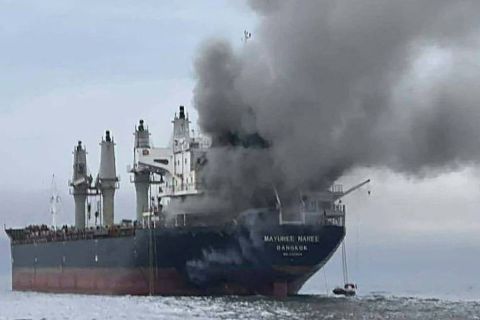
Trump’s call for a naval coalition to secure the Strait of Hormuz has so far met a muted response from key US partners. Countries including the United Kingdom, Australia, Japan, France, and others have stated they are not planning to deploy warships to the strait despite Trump’s appeal, highlighting the challenges Washington faces in mobilising allied support.
The hesitation underscores the difficulty the US has had in rallying traditional partners behind its strategy and reflects broader international caution over deeper involvement in the conflict with Iran. Meanwhile, Tehran’s continued refusal to cease strikes has reinforced its defiance in the face of sustained US‑Israeli military pressure, including recent Trump's remarks, describing them as “empty threats.”