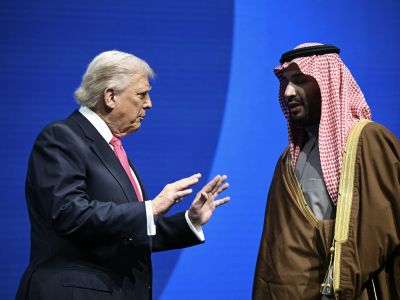
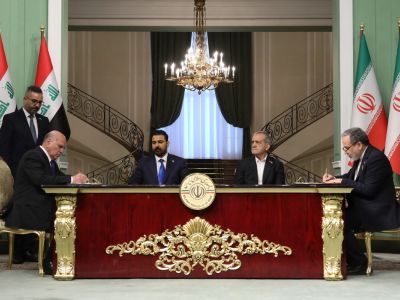
ALBAWABA- US President Donald Trump said Thursday that the newly signed civilian nuclear cooperation agreement with Saudi Arabia will take effect only if Riyadh joins the Abraham Accords, while ruling out any Saudi uranium enrichment under the deal.
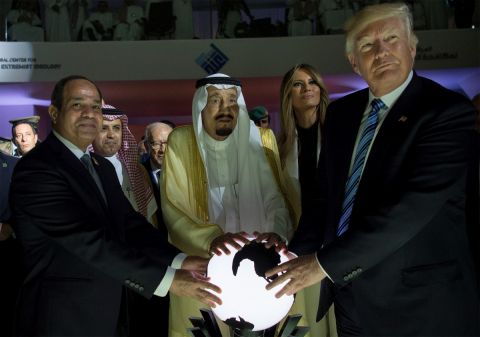
In a post on Truth Social, Trump said the agreement is "totally subject to Saudi Arabia joining the very respected and successful Abraham Accords" and stressed that the nuclear program would be strictly for peaceful purposes.
"There will be no enrichment of material!" Trump wrote, adding that the United States supports civilian nuclear energy without uranium enrichment, citing countries that operate nuclear power plants using imported fuel.
Trump's remarks clarify the terms of the agreement signed on July 22 by US Energy Secretary Chris Wright and Saudi Energy Minister Prince Abdulaziz bin Salman. The accord, concluded under Section 123 of the US Atomic Energy Act, establishes a framework for up to 30 years of civilian nuclear cooperation and positions American companies to play a leading role in developing Saudi Arabia's nuclear energy infrastructure.
The agreement focuses on peaceful nuclear energy production, with US oversight intended to ensure compliance with non-proliferation commitments. While earlier reports suggested the possibility of a joint US-Saudi study on domestic nuclear fuel production, Trump's latest statement makes clear that uranium enrichment will not be permitted under the agreement.
White House Press Secretary Karoline Leavitt reinforced the administration's position, saying the agreement would not proceed unless Saudi Arabia joins the Abraham Accords. She described the deal as consistent with Trump's "America First" agenda, arguing that it would create jobs for US companies, expand American energy exports, and strengthen strategic partnerships while maintaining strict non-proliferation standards.
The agreement marks a significant step in US-Saudi relations but also highlights Washington's contrasting approach toward Iran's nuclear program. While the United States is prepared to support Saudi Arabia's civilian nuclear ambitions under strict conditions, it continues to oppose Iran's uranium enrichment activities, citing concerns that they could contribute to the development of nuclear weapons.
The deal also adds a diplomatic dimension to US efforts to expand the Abraham Accords, the normalization framework launched during Trump's first administration between Israel and several Arab states. Saudi Arabia has previously linked normalization with Israel to progress on the Palestinian issue and broader security guarantees, leaving the timeline for any agreement uncertain.
The nuclear accord remains subject to congressional review before entering into force, with lawmakers expected to closely examine its non-proliferation provisions and strategic implications for the Middle East.