ALBAWABA- Israeli Prime Minister Benjamin Netanyahu announced on Wednesday that he has accepted an invitation from U.S. President Donald Trump to join the newly established “Board of Peace,” a U.S.-led body intended to supervise the Gaza ceasefire and guide postwar reconstruction efforts.
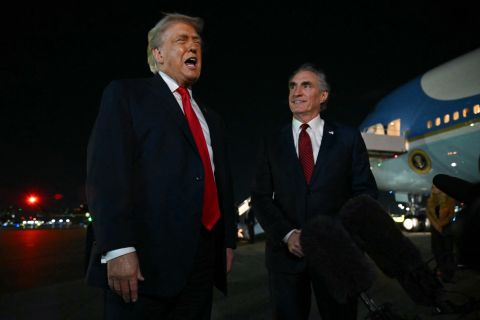
Netanyahu’s decision follows initial reservations within his office over the board’s executive makeup, which includes representatives from regional rivals such as Turkey and Qatar.
His participation nonetheless signals a clear alignment with Trump’s diplomatic initiative and places Israel at the center of a broader framework aimed at managing Gaza’s transition from war to stability.
According to draft documents, the Board of Peace, chaired by Trump, was conceived as a supervisory mechanism for Gaza with ambitions to evolve into a wider forum for resolving international disputes, described by supporters as a U.S.-driven alternative to the UN Security Council.
The charter indicates that permanent membership requires a $1 billion contribution, effectively centralizing authority within the U.S.-led structure.
Confirmed participants include leaders or representatives from Israel, the United Arab Emirates, Morocco, Vietnam, Kazakhstan, Hungary, Argentina, and Belarus. Invitations have also been extended to more than 60 countries, including Russia, India, Egypt, Turkey, Canada, and the European Union’s executive arm, with several governments still weighing their participation.
The board’s executive committee features senior U.S. and international figures, including Secretary of State Marco Rubio, Jared Kushner, U.S. envoy Steve Witkoff, former British Prime Minister Tony Blair, Apollo CEO Marc Rowan, World Bank President Ajay Banga, and Trump’s Deputy National Security Adviser Robert Gabriel.
A separate Gaza Executive Board, tasked with implementation on the ground, will oversee security arrangements, Hamas disarmament, and reconstruction under Palestinian technocratic management, alongside an international security force.
The initiative builds on Trump’s 20-point Gaza peace plan, finalized in late 2025, which ended more than two years of fighting that left Gaza largely devastated. Official figures cite more than 73,000 Palestinians killed, 170,000 injured, and the destruction of roughly 85% of the enclave’s infrastructure.
Israel continues to reject accusations of war crimes, including International Criminal Court arrest warrants issued for Netanyahu in November 2024, which it dismisses as politically motivated.
Netanyahu’s inclusion has drawn sharp criticism from Palestinian analysts and human rights advocates, who argue that the board lacks credibility and risks deep institutional bias. They point to Israel’s central role in the Gaza war and the influence of openly pro-Israel figures within the leadership, including Netanyahu himself.
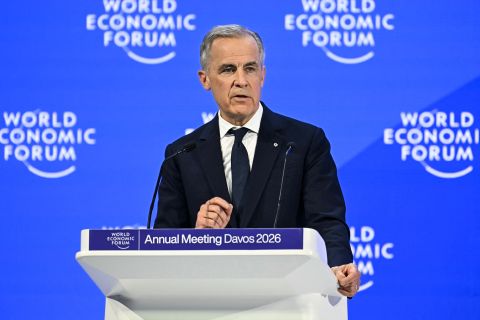
Netanyahu is wanted by the International Criminal Court (ICC) over alleged war crimes committed in Gaza, where more than 73,000 Palestinians were killed, and over 178,000 wounded. Widespread destruction followed the events of October 7, leaving much of the enclave devastated.
Trump is expected to formally outline the board’s mandate and structure during an announcement in Davos on Thursday, where the initiative is likely to face close international scrutiny.