ALBAWABA- Lebanese President Joseph Aoun met with U.S. President Donald Trump at the White House on Tuesday in the first visit by a Lebanese head of state to Washington in nearly two decades, with talks centered on implementing a U.S.-brokered framework aimed at restoring stability in southern Lebanon and reducing tensions with Israel.
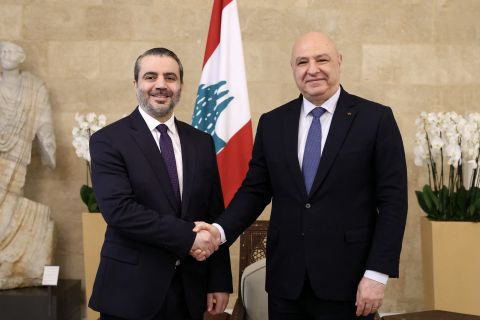
The meeting focused on a trilateral framework agreement signed by Lebanon, Israel, and the United States in Washington on June 26. The agreement outlines a phased, performance-based roadmap that includes the gradual withdrawal of Israeli forces from parts of southern Lebanon, the deployment of the Lebanese Armed Forces (LAF), the disarmament of non-state armed groups—primarily Hezbollah—and the establishment of pilot zones to test implementation before broader expansion.
The framework was negotiated following months of U.S.-mediated diplomacy aimed at ending hostilities that intensified during the broader regional confrontation involving Israel, Iran, and Hezbollah earlier this year. While the agreement falls short of a formal peace treaty, it is intended to strengthen Lebanese state authority in the south, address Israeli security concerns, and reduce the risk of renewed cross-border conflict.
President Aoun, a former commander of the Lebanese army, has made restoring the state's monopoly over arms and reinforcing national sovereignty a central objective of his presidency. U.S. officials have likewise described the framework as an effort to strengthen Lebanese state institutions while limiting the influence of Iranian-backed armed groups.
Coinciding with Aoun's visit, the Lebanese Armed Forces entered the southern town of Zawtar al-Gharbiyeh after Israeli troops withdrew from the area, marking one of the first pilot zones established under the agreement. Lebanese military engineering units cleared roads and unexploded ordnance before additional army units were deployed.
Lebanese and Israeli officials described the move as a coordinated withdrawal and handover conducted under the terms of the U.S.-brokered framework. However, the implementation process remains fragile, with Israeli forces continuing operations in other parts of southern Lebanon and Israeli officials warning that any uncoordinated Lebanese military movements could jeopardize the ceasefire.
Despite the diplomatic progress, significant challenges remain, including Hezbollah's future military status, verification of disarmament measures, Israeli security concerns, and deep political divisions within Lebanon over the role of armed resistance groups.
During the White House meeting, Aoun sought continued U.S. political, economic, and military support for Lebanon, as well as American backing to encourage further Israeli withdrawals from southern Lebanon. Washington has reiterated its support for strengthening the Lebanese state and implementing the framework agreement as a means of promoting long-term regional stability