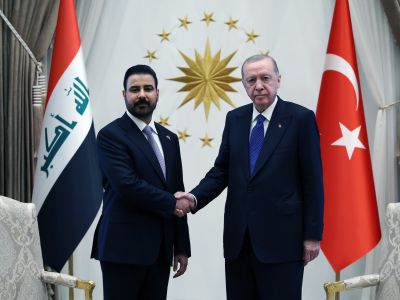
ALBAWABA- Israeli Defense Minister Israel Katz issued a stark warning to Turkish President Recep Tayyip Erdogan, urging him not to challenge Israel and cautioning against deeper Turkish military involvement in the region, as Israeli officials signaled growing concern over Ankara’s expanding influence in Syria and the wider Levant.
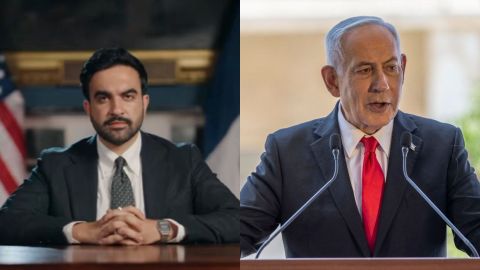
Speaking in a wide-ranging interview with Israel's Channel 14, Katz declared that Israel would defend its interests against any perceived threat and rejected comparisons between modern-day Israel and past empires.
“We are not a collapsing Christian empire. Jerusalem is not Istanbul, which you conquered when you established the Ottoman Empire. We are here forever. Jerusalem is ours forever. We know how to defend ourselves, and we are strong. Don’t play with us,” Katz said.
He also warned Erdogan not to “put himself in the position that Iran put itself in,” arguing that Turkey still has an opportunity to avoid confrontation. Katz urged the Turkish president to focus on Turkey’s domestic affairs while reaffirming that Israel would continue pursuing its own strategic objectives.
The remarks came as several senior Israeli officials voiced alarm over Turkey’s expanding military and political presence in Syria following the fall of the Assad government.
Israeli Diaspora Affairs Minister Amichai Chikli said he did not believe Israel could separate Turkey from Syria or establish a buffer zone between them, claiming that Turkish weapons are being used by Syria's new government forces and that Turkish generals are already present within the Syrian army. He also alleged that Turkish military bases are under construction in Syria and that Turkish naval vessels are operating from the port of Tartus.
“Turkey is filling the vacuum left by Iran,” Chikli said, adding that “Syria and Turkey have now become the same thing.” He further warned that Turkish influence could eventually extend into Lebanon, arguing that Ankara views the Levant as encompassing Syria, Lebanon, Jordan, and Israel.
Israeli Energy Minister Eli Cohen echoed those concerns, warning that Israel would respond to any permanent Turkish military deployment in Syria. “Let Turkey know that if it establishes military bases in Syria, we will also establish bases there,” Cohen said. He added that Israel has fundamentally changed its security doctrine by creating security zones beyond its internationally recognized borders.
“Today, the security zone surrounding Israel in Gaza is located inside Gaza, the security zone surrounding Syria is located inside Syria, and the security zone surrounding Lebanon is located inside Lebanon,” he said.
Addressing Israel's military campaign in Gaza, Katz said Israeli operations had fundamentally transformed the territory, claiming that areas once regarded as strongholds of armed groups had been destroyed. “Today, the bravery is no longer there, nor is Jabalia. All these terrifying places you came for no longer exist... We have destroyed Gaza,” he said.
Katz asserted that nearly 70% of Gaza had been destroyed during the war, including both underground tunnel networks and surface infrastructure. He said similar tactics had been employed in southern Lebanon, where extensive damage had been inflicted on villages and other areas.
Commenting on Iran, Katz claimed Tehran has avoided directly attacking Israel despite launching strikes against other countries hosting US military assets because it understands that Israel would respond forcefully. He also referred to US military operations against Iran and praised Prime Minister Benjamin Netanyahu's leadership, arguing that Israel's actions had prevented what he described as a strategic threat.
The statements come amid heightened tensions between Israel and Turkey, driven by Ankara's strong criticism of Israel's military operations in Gaza and Lebanon, Turkish support for the Palestinian cause, and Turkey's growing influence in post-Assad Syria. They also follow the recent military confrontation between the United States and Iran, in which Israel played a central role alongside Washington.