Allergies On The Rise Globally
An Emerging Public Health Issue in UAE
Dubai conference to tackle risk factors and promote remedies
A major conference in Dubai tackling allergies and highlighting their remedies will help professionals deal with this growing worldwide health problem. The Middle East-Asia Allergy Asthma Immunology Congress (MEAAIC) will be the first ever internationally-developed allergy/immunology meeting in the Middle East-Gulf region.
A staggering fifteen percent of the population in the UAE suffers from asthma, one of the most common allergies, according to Dr. Bassam Mahboub, local expert, vice president of the UAE Respiratory Society and local chair of MEAAAIC, who notes that the percentage of asthma in children in the UAE is twice as higher than in adults.
“Asthma is a chronic inflammatory airways disease. When asthma strikes, your airways become constricted and swollen, filling with mucus. Your chest feels tight – you may cough or wheeze – and you just cannot seem to catch your breath. In severe cases, asthma attacks can be deadly,” Dr. Mahboub explains. In about 25 years, asthma will be one of the main killers worldwide.
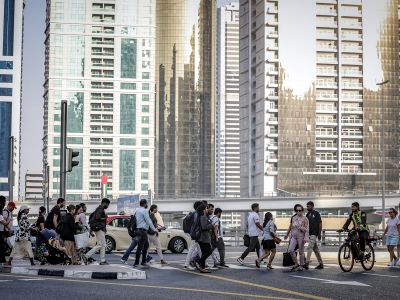
He also notes that the figure is set to rise in the region as the environmental conditions deteriorate as a result of the high levels of air pollutions from cars, factories and construction activity. “As pollen from trees, grass and weeds cause allergic rhinitis and asthma; there is also a need to grow different kinds of trees and grass to tackle this emerging public health issue,” he adds.
Professor Ruby Pawankar, Treasurer of the World Allergy Organization and Chair of the MEAAAIC, explains: “Allergic diseases like hay fever, asthma, skin allergies and food allergies constitute a growing health problem globally. She notes that In Asia itself, 5-45% of a population of 4 billion people, suffer from allergic diseases, an alarming figure that indicates that allergy is an epidemic of the 21st century . Although data in the Middle East region is limited, the prevalence of hay fever, eczema and asthma is alarming.” This would result in increased costs to healthcare systems and indirect costs due to loss of school and work days and poor performance leads to major socio-economic burden to countries.
The burden of allergic diseases continues to grow worldwide. However, the economic burden in the Asia-Pacific region is higher than that in the United States in relation to the per capita gross domestic product (13% in the Asia-Pacific versus 2% in the United States) and the costs in the Middle East region are yet not well defined. While lack of public awareness is an issue, the number of health care professionals trained in the diagnosis and treatment of allergy is insufficient in many countries so untold numbers of patients go undiagnosed or are undertreated.
The MEAAIC, which will take place in Dubai from 26 to 29 March 2009, is co-organized by the Lebanese Society of Allergy and Immunology, the Asian Allergy Asthma Foundation, the Emirates Respiratory Allergy Society and the Dubai Health Authority. The congress is supported by the Ministry of Health of UAE and Emirates Medical Association. Several world organizations including the World Allergy Organization (WAO), the American College of Allergy, Asthma & Immunology (ACAAI), the European Academy of Allergology and Clinical Immunology (EAACI) are also partnering in this effort.
The WAO and the ACAAI will organize its first Emerging Societies Program for the Middle East Northern African region with the premise of helping the many countries in the region to initiate and develop professional allergy societies. The WAO, in collaboration with the ACAAI and EAACI, will also organize an Allergy Training School for young representatives from different countries in the region in to help build sustainable capacity in the field of allergy and encouraging local experts to widen the provision of patient care.
“We trust that MEAAAIC will lay the foundation for developing the field of allergy in the region, help in capacity building, increase public awareness, interact with policy makers and help the suffering patients at grass root level,” Professor Pawankar adds.
More than 50 speakers from around the world will lecture on hot topics on asthma, rhinitis, food allergies, occupational allergies, skin allergies. Leading experts from the region will also discuss the regional perspectives, thus enhancing scientific exchange and providing a platform to understand the commonalities and the diversities in the etiology, epidemiology and the disease patterns that exist in different parts of the world.