By Randa Darwish
Tensions are on the rise in Sudan as hundreds take to the streets to protest price increases that are making their daily lives more miserable.
Since the southern part of Sudan seceded from the north and declared independence in 2011, the country’s economy rapidly deteriorated as it lost most of its oil and foreign currency which worsened people lives and financial situation.
On Wednesday, protesters in the Sudanese city of Atbara went to the streets chanting anti-government slogans.
This led the government to declare a state of emergency in the city, especially when videos of burning tires and cars went viral on social media and with violence erupting among protesters with teargas used by security forces to disperse them.
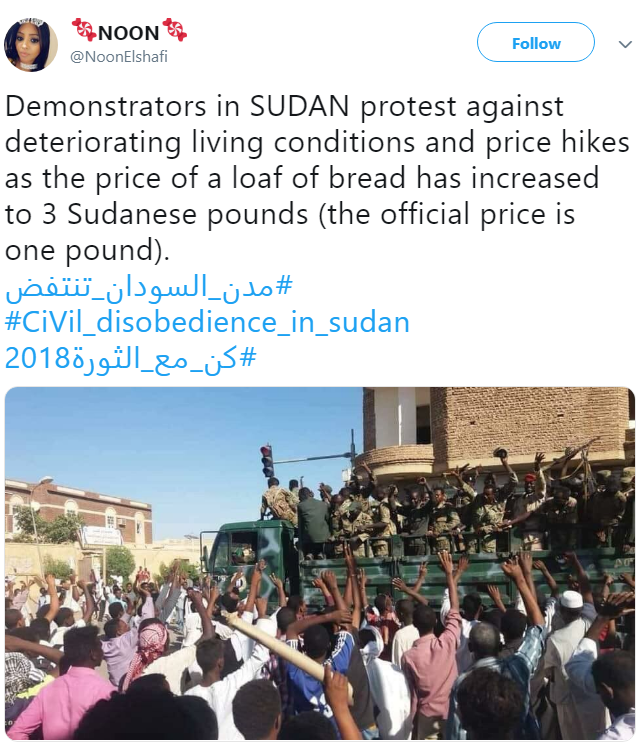
However, the state of emergency did not prevent more people from going to the streets on Thursday. More joined the protests in Atbara with dozens demonstrating in Dongola and al Qadarif who joined in a show of hands.
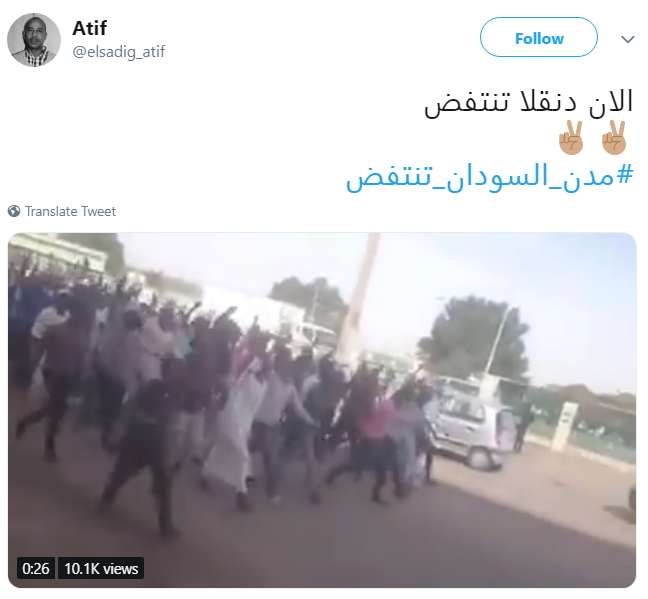
Translation: “Now, Dongla uprising.”
Hashtag مدن السودان تنتفض [Sudan cities uprising] went viral among social media users late on Wednesday leading it to the worldwide trends list with hundreds of thousands of tweets.
Many videos were shared from the coastal city of Port Sudan.
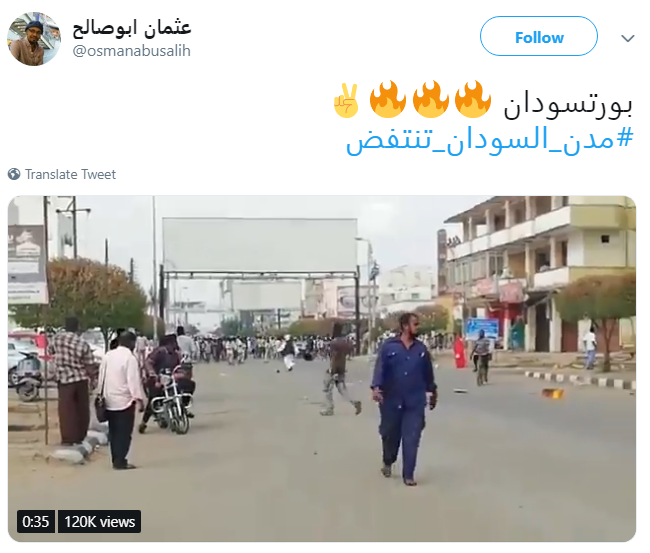
Translation: “Port Sudan.”
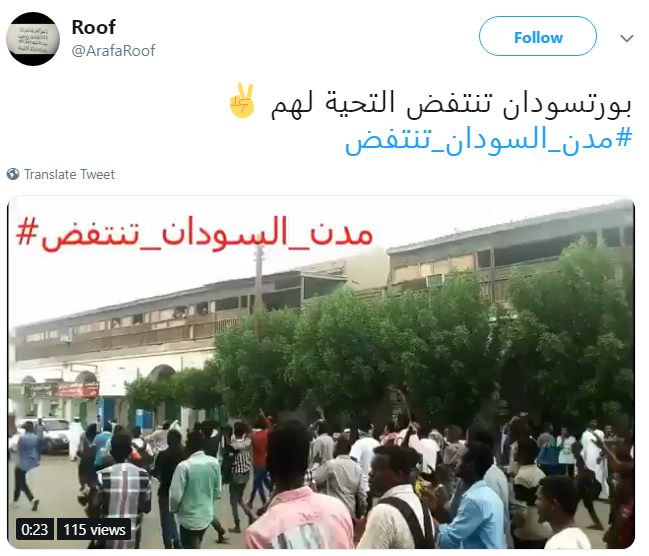
Translation: “Port Sudan uprising. Salute to them.”
Also, videos for dozens protesting in Sudan University were widely shared.
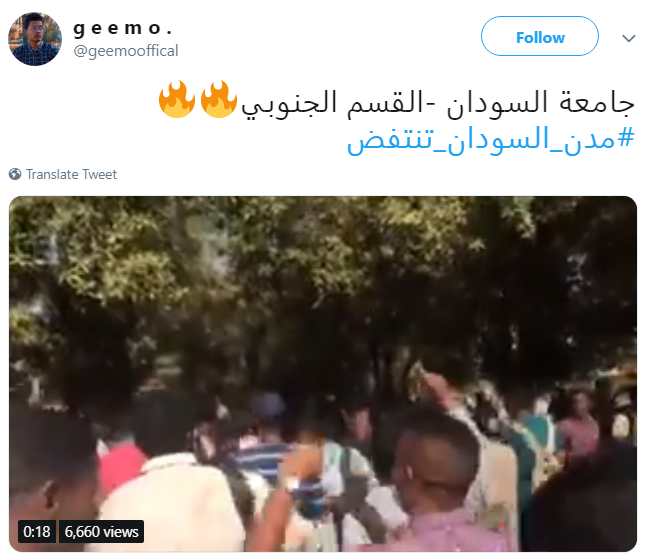
Translation: “Sudan University - Southern Part.”
Also, there was protest in the University of Khartoum.
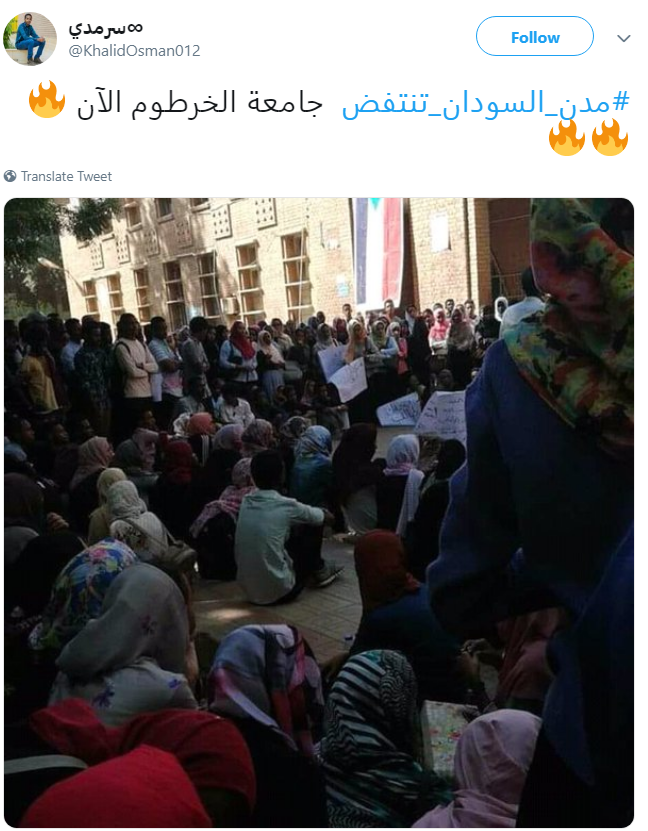
Translation: “University of Khartoum now.”
With more Sudanese cities joining the uprising, protesters are now raising the stakes, demanding that the government leave office, together with long-ruling president Omar Bashir.
Many are considered the uprising in Sudan as the nation’s share of the Arab Spring that has finally come to the country.
During the peak periods of the Arab Spring that Started in late 2010 and went on to 2011, Sudanese went to streets with hopes to overthrow the authoritarian regime that ruled them for decades. However, and unlike in other Arab countries, the tactics of the Sudanese government and security forces helped to quash the protests.