


By Randa Darwish
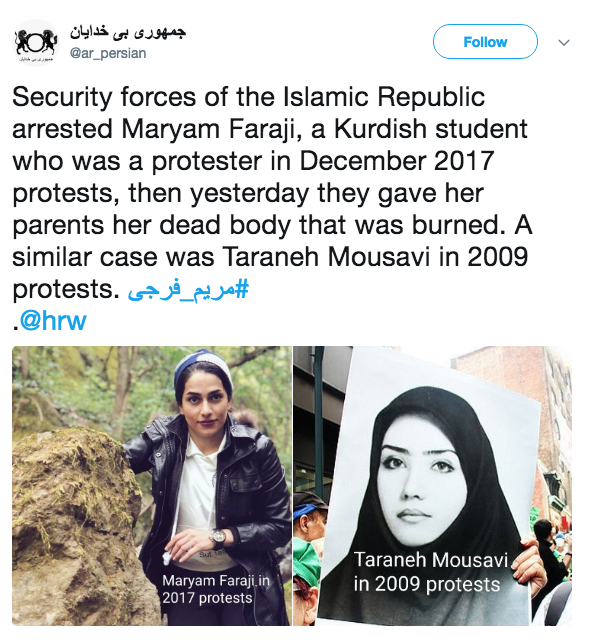
Maryam Faraji, a 33-year-old Iranian activist who went missing last week, has been found dead on July 15, with all fingers pointing to the Iranian regime.
The young Iranian activist, who is a financial manager of a company in city of Shahriar to the west of Tehran, disappeared on Thursday, July 5, after she left her family’s home in a city near the Iraqi border, according to her lawyer, Mohamad Aghasi.
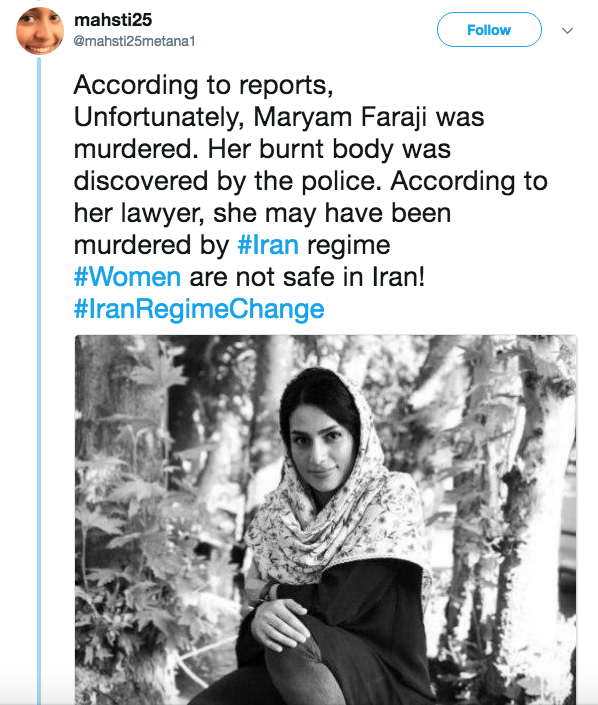
Her whereabouts remain unknown, and her lawyer confirmed she never reached her intended destination or made any phone calls to any friends and relatives, raising the possibility that something might have happened to her.
On July 14, when Aghasi posted on his Twitter saying:
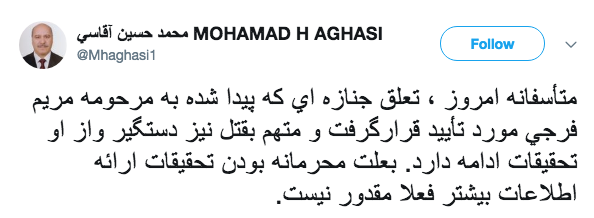
Translation: “Unfortunately, today, a dead body was found belonging to late Maryam Faraji and has been confirmed. The defendant has been arrested and due to confidentiality of the investigation, it is not possible to provide more information at this time.”
The Iranian Radio Farda website cited Aghasi saying a DNA test is still needed for the found dead body, although her family were able to recognize her teeth and few familiar on her neck.
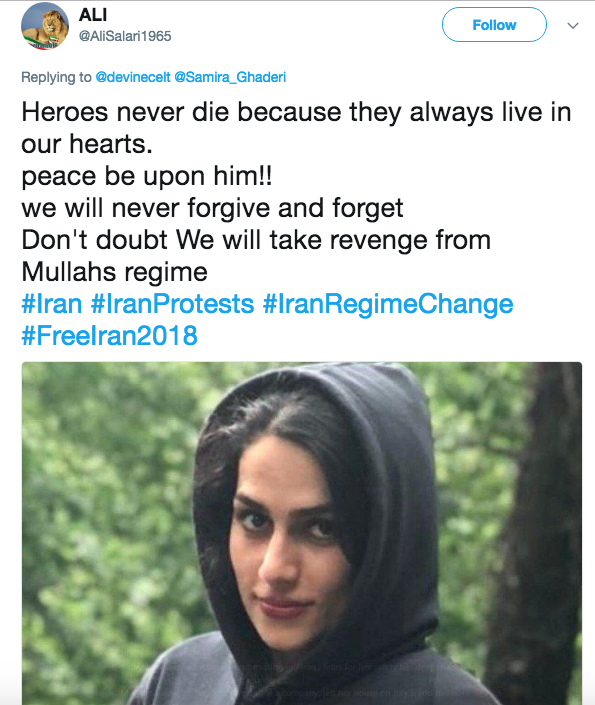
Her mysterious murder sparked a public outcry among Iranians especially as she may have been killed by the Iranian regime.
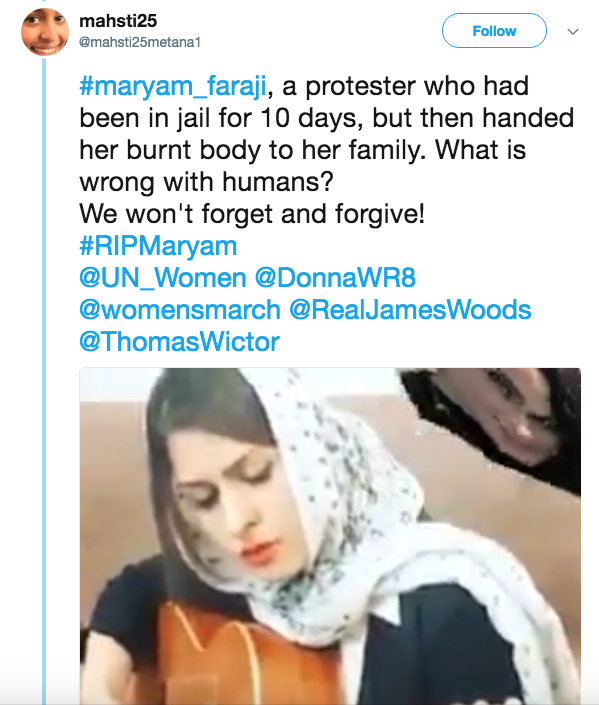
Faraji was known for her civil activism and her participation in anti-government protests in January 2018, when she was detained and sentenced for three years in prison before being released on bail and she was waiting for the Court of Appeal’s decision on her case.
Faraji’s story brought back to mind the 28-year-old Iranian Taraneh Mousavi’s story, who was kidnapped by Basij forces, raped and tortured for 22 days, and then set on fire and left in the desert in 2009.
The Iranian authorities have been carrying out a crackdown on activists or anyone who might participate in protests against the government or the regime. Around 3700 protesters have been arrested by the government since late December 2017 for joining anti-government protests.
During the last month, videos shared by western media outlets and social media activists showed tens of thousands of Iranians going on massive protests and confrontations with police in the Iranian capital Tehran for several days.
It was all believed to stem from the troubled economy, the rise in the prices and the fall in the value of the Iranian rial after the US President Donald Trump announcement that his country would withdraw from the nuclear deal and re-impose sanctions on Iran.


