Human capital, innovation and leadership are central themes in The United Arab Emirates and the World: Scenarios to 2025, a new scenario report launched by the World Economic Forum today. The scenarios offer insights into crucial forces affecting the UAE and its international partners, moving the focus from the rapidly evolving present to a consideration of three alternative visions of the future over a 20 year time horizon. This Report poses two key focal questions. First, will leaders in the UAE be able to implement the necessary economic and political reforms, and enforce the rule of law, both in public and private governance? Second, will the UAE be able to maintain internal order and stability, in particular vis-à-vis a complex and uncertain regional situation?
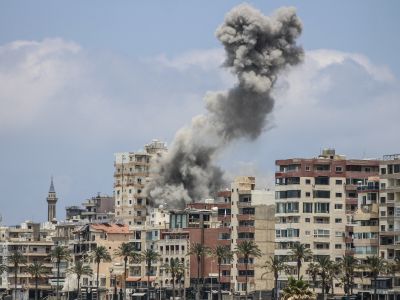
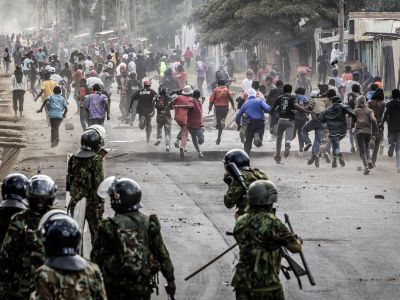
The report explores the long-term effects of a range of risks and opportunities facing the UAE, as well as the interaction of external and internal factors in shaping the country's future. The three scenarios are entitled: Oasis, Sandstorm and The Fertile Gulf. Oasis is a future in which the UAE leverages regional integration to minimize the volatility caused by regional instability while upgrading its human resources to involve its national populations in a robust, (yet primarily government-driven) economy. Sandstorm is a scenario whereby a confluence of dramatic regional events places the UAE in a difficult situation which leaders are only able to manage reactively. Reforms are compromised in an attempt to stabilize local conditions, and increased government spending does not result in long-term solutions to local demographic and economic problems. Finally, The Fertile Gulf is a world where the UAE consolidates its role as a global economic player by becoming an innovation hub and a centre for industry, with investment and prosperity spreading across the seven emirates.
“In the scenario where leadership and governance were exercised at every level and entrepreneurial spirit is well-rewarded – as depicted in The Fertile Gulf –,the UAE’s momentum and economic leverage proves to be significant. Our work indicates that critical and creative thinking are central to upgrading human capital and fostering innovation,” states Chiemi Hayashi, the Scenarios Project Manager at the World Economic Forum and co-author of the report with Nicholas Davis.
"The three scenarios are designed to challenge, elicit new ideas and spur debate and action," said Sherif El Diwany, Director of the Middle East Team at the World Economic Forum. "It is our hope that leaders from business, government, academia and civil society in the UAE find this work useful in their efforts to realize their diversification and economic growth aspirations."
In partnership with the Executive Affairs Authority of Abu Dhabi and with input from the federal ministries of labour and education, as well as other federal and emirate-level bodies, The United Arab Emirates and the World: Scenarios to 2025 engaged over 300 senior government representatives, CEOs, leading academics and members of civil society from around the Gulf region and the world. These scenarios build on The Gulf Cooperation Council (GCC) Countries and the World: Scenarios to 2025, which was launched at the World Economic Forum Annual Meeting 2007. To explore the deeper issues and implications of the region’s development, the World Economic Forum will take the key outputs of the United Arab Emirates scenarios to the World Economic Forum Annual Meeting 2008 in January in Davos.
The Report is a product of the World Economic Forum’s multistakeholder engagement. The scenarios are designed to help decision-makers to enhance the robustness of strategies in the UAE and abroad, to raise awareness of both the internal and external environments, to provide momentum for action, and to increase response speed to unexpected events. The World Economic Forum hopes that the UAE scenarios will engage stakeholders in the future of the country in constructive debates about the critical issues influencing the UAE’s direction, and help to develop creative and forward-looking solutions for current and impending challenges.