ALBAWABA - Finland has five nuclear reactors and before 1994 it used to ship its nuclear waste to Russia, a law change however, is forcing the country to adapt and look inwards for its long-time nuclear waste storage.
Since humans existed, there was the question of what to do with the waste we produce, and the answer was more often than not: 'bury it where no one can see' and this seems to ring true today with nuclear waste as it did back in the Iron Age.
'Onkalo' - The 'Cave'
Finland is looking to open the world's first nuclear waste eternal tomb, called 'Onkalo' which means 'Cave' in Finnish. The tomb is blasted into bedrock 443 meters below ground level and is nearly ready to start operations.
Ever since countries started using nuclear energy in 1950s, there was no clear answer on what to do with the waste - most of it in the world is sitting in temporary storage; Finland is giving the final answer with its nuclear waste repository.
Many countries are already building these types of facilities, including Finland's neighbor Sweden, but Finland is expected to be the first to use the long-term underground solution pending the final assessment from the Finnish Radiation and Nuclear Safety Authority (STUK) in June.
The 'Forever' Solution
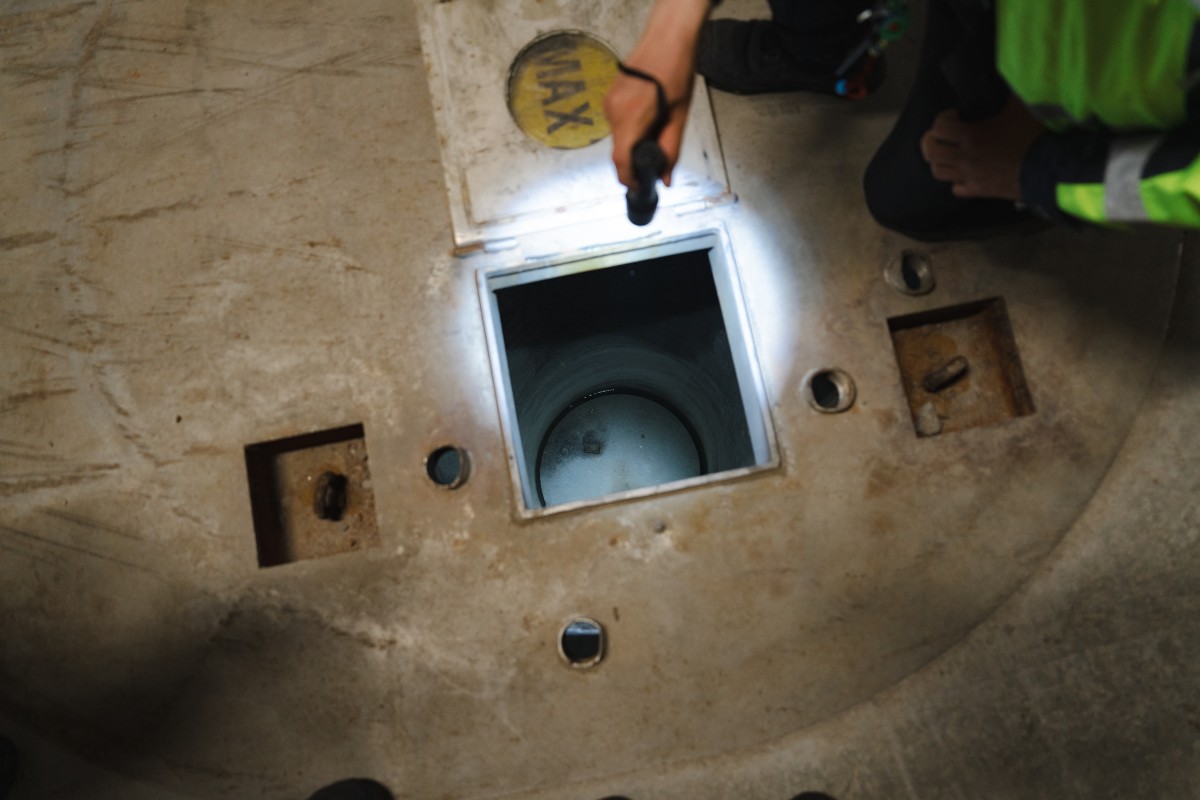
Picture taken on May 18, 2026 shows a worker shining a torch on the inside of a test disposal canister for radioactive spent nuclear fuel at the Onkalo nuclear repository / Photo by (ALESSANDRO RAMPAZZO / AFP)
In the damp tunnels, where the spent nuclear fuel and waste will be buried for thousands of years, the chief executive of nuclear operator Teollisuuden Voima Oyj (TVO) said: "We hope we can start the operation either at the end of this year or most probably at the beginning of next year,"
Containing space for 6,500 tons of uranium, the 'Cave' will be providing the final and permanent storage location for nuclear waste, starting with the waste in the nearby Olkiluoto power plant.
The site broke ground in 2004 at a cost of $1.16 billion and its completion provides space for nuclear waste for the next 100 years, and when sealed will keep the waste safe for at least 100,000 years, operations may be extended however if new power plants open.
"Basically, it needs to be safe forever," said Lauri Parviainen, a Posiva chemist who showed reporters around the facilities, as the fuel will be radioactive for "tens of thousands of years." Further noting that after 100,000 years, the fuel will be as radioactive as the uranium core of which it was made.
Before storage underground, the nuclear will be put into highly corrosion-resistant copper canisters, and will be lowered thereafter into holes drilled in the tunnels and then filled with bentonite clay to seal them. Once every 300-meters of the tunnels are taken up, they will be sealed with a steel-reinforced concrete plug.
The Risks and the Future
Speaking in on the risks of this type of storage, an expert on nuclear safety at STUK said: "hazard potential of the waste, the first 10,000 years are very important for keeping the capsules intact," mentioning corrosion of the copper canisters and earthquakes during future ice ages which could damage the canisters and cause leaks, while the overall risk assessments over the years were 'positive'.
A point which is debated by the Finnish Association for Nature Conservation, they remain critical of the project saying deeming it possessing a long-term serious risk to Finland; saying in a statement: "No one can guarantee the safety of Onkalo for thousands of years,"
Finland is planning to build more nuclear reactors in the future called SMRs (Small Modular Reactors), how the spent fuel from these reactors would be managed has not been decided yet.