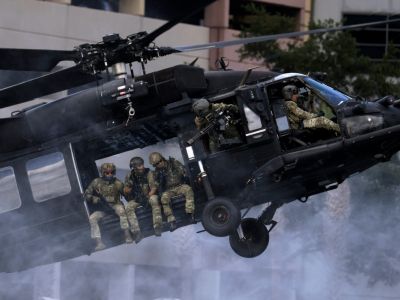
President Bush, defending the Iraq war, ordered gradual reductions in American forces in Iraq on Thursday night (Friday, Middle East time) and said, "The more successful we are, the more American troops can return home."
Bush said that 5,700 U.S. troops would be home by Christmas and that four brigades - for a total of at least 21,500 troops - would return by July, along with an undetermined number of support forces. Now at its highest level of the war, the U.S. troop strength stands at 168,000.
"The principle guiding my decisions on troop levels in Iraq is: return on success," the American leader said.
The reductions declared by Bush represented only a slight hastening of the originally scheduled end of the troop increase that Bush announced in January. When the cutbacks are complete, about 132,000 U.S. forces will be in Iraq.
Bush said Iraqi leaders "have asked for an enduring relationship with America.
"And we are ready to begin building that relationship in a way that protects our interests in the region and requires many fewer American troops."
Bush described the withdrawals, and the U.S. forces still fighting in Iraq, as a compromise on which war supporters and opponents could agree.
"The way forward I have described tonight makes it possible, for the first time in years, for people who have been on opposite sides of this difficult debate to come together," Bush said, according to the AP.
The U.S. president said, "Some say the gains we are making in Iraq come too late. They are mistaken. It is never too late to deal a blow to al-Qaeda. It is never too late to advance freedom. And it is never too late to support our troops in a fight they can win."
"Whatever political party you belong to, whatever your position on Iraq, we should be able to agree that America has a vital interest in preventing chaos and providing hope in the Middle East," the president said.
He added, "Let us come together on a policy of strength in the Middle East." Bush acknowledged that Iraq's government has failed to meet goals for political reconciliation and security. "In my meetings with Iraqi leaders," he said, "I have made it clear that they must."
"Iraq's national leaders are getting some things done," Bush contended. He said the Baghdad government has passed a budget and is sharing oil revenues among the provinces even though legislation has not been approved. Changes that have begun to take hold in the provinces must be followed in Baghdad, he said.
"Americans want our country to be safe and our troops to begin coming home from Iraq," Bush said. He said his strategy would permit "people on opposite sides of this difficult debate to come together."