ALBAWABA- Iran has issued one of its strongest warnings yet in the escalating confrontation with the United States, with Parliament Speaker Mohammad Bagher Ghalibaf declaring that regional security and energy flows cannot be separated from Iran’s own security interests.
In a statement outlining what he described as an “all or none” equation, Ghalibaf warned that if Iran is prevented from exporting oil or its security interests are threatened, no country in the region should expect uninterrupted energy exports or safe infrastructure.
“In a region where we do not sell oil, no one will sell oil. If our security is not ensured, no infrastructure will be safe,” Ghalibaf said, adding that “the security of the Strait is in the absence of American forces” and that conditions in the Strait of Hormuz would not return to their pre-war state.
The remarks signal Tehran’s position that security in the Gulf is interconnected and that any attempt to pressure Iran through blockades, military strikes, or restrictions on its energy exports would carry consequences for the wider region.
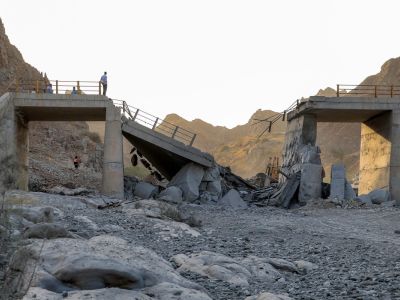
The warning came after US President Donald Trump threatened further retaliation against Iran over attacks on shipping in the Strait of Hormuz. Trump said that any Iranian strike on vessels using missiles, drones, or other weapons would be met with US attacks on Iranian infrastructure, including bridges and power plants, potentially near Tehran.
Trump’s comments followed the deaths of US service members in attacks linked to the wider regional confrontation, with the US president vowing a forceful response and warning Iran of severe consequences. He also said that the US administration’s decisions regarding the conflict were not linked to domestic political considerations.
Iran has responded by warning that any US attack on Iranian infrastructure would trigger retaliation against US-linked facilities and energy infrastructure across the region, particularly in Gulf states hosting American military bases. The warnings follow previous Iranian-linked strikes that affected energy and water infrastructure in Gulf countries.
The escalation is unfolding amid a broader struggle over key maritime chokepoints. In the Strait of Hormuz, Iran has sought to challenge US naval dominance and impose pressure on regional shipping, while Washington has vowed to maintain freedom of navigation through one of the world’s most important oil transit routes.
The crisis has also expanded into the Red Sea, where Iran-aligned Houthi forces in Yemen announced a maritime blockade targeting Saudi shipping, threatening vessels linked to Saudi Red Sea ports. The move has raised concerns over another potential pressure point for Gulf energy exports, particularly as Saudi Arabia has relied more heavily on Red Sea routes amid instability around Hormuz.
The combination of tensions in Hormuz and the Red Sea has increased fears of a wider disruption to global energy supplies, with potential consequences for oil prices, shipping costs, and regional stability.